What Is Going Viral in Science news publication? 20 Stories From the Past Days and Months
What are Americans reading and sharing right now? This guide to viral science news publication stories gathers real headlines from news outlets, credits every source by name, and explains how to read each one with a clear head. It is a starting point, not a replacement for the original reporting.
Every item below points to a real report from a named outlet. The commentary around each headline is general context about how news spreads and how to read it, not new reporting. If a story matters to you, follow the link and read it in full before you share it.
How These Stories Were Chosen
The stories below were found through public news feeds that list headlines from many outlets. We look for recent reports that match the topic, skip repeats of the same story, and keep the outlet name and date next to each headline so you can judge the source for yourself.
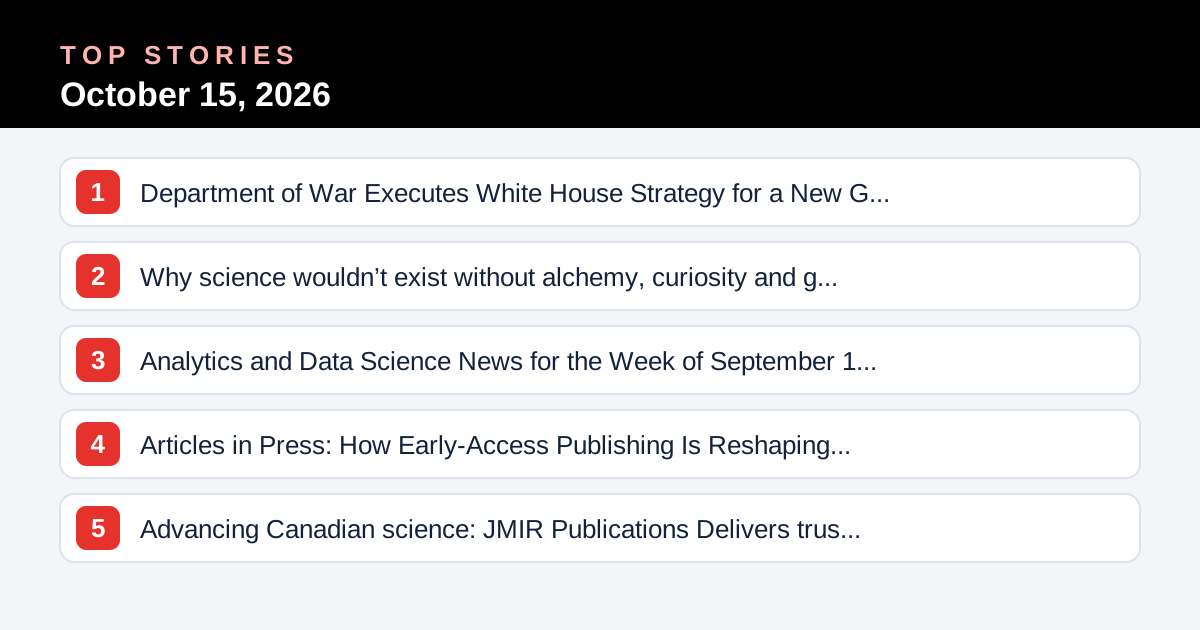
Department of War Executes White House Strategy for a New Golden Age of Science
The headline "Department of War Executes White House Strategy for a New Golden Age of Science" appeared on Oct 8, 2026 from U.S. Department of War (.gov). Interest in a story often grows when several outlets cover it at once, which makes it feel bigger than any single report. Updates are common as new information arrives, so the original page may now say more than the headline did.
Source: U.S. Department of War (.gov), Oct 8, 2026
Why science wouldn’t exist without alchemy, curiosity and great writing: Books in brief
Nature reported this story on Sep 25, 2026 under the headline "Why science wouldn’t exist without alchemy, curiosity and great writing: Books in brief". When a story trends, the first version many people see is a screenshot of the headline rather than the article itself. Updates are common as new information arrives, so the original page may now say more than the headline did.
Source: Nature, Sep 25, 2026
Analytics and Data Science News for the Week of September 18; Updates from Alteryx, Databricks, Golden Analytics & More
Under the headline "Analytics and Data Science News for the Week of September 18; Updates from Alteryx, Databricks, Golden Analytics & More", Solutions Review covered this story on Sep 18, 2026. Interest in a story often grows when several outlets cover it at once, which makes it feel bigger than any single report. Updates are common as new information arrives, so the original page may now say more than the headline did.
Source: Solutions Review, Sep 18, 2026
Articles in Press: How Early-Access Publishing Is Reshaping Science Communication
On Oct 14, 2026, Bioengineer.org published a report headlined "Articles in Press: How Early-Access Publishing Is Reshaping Science Communication". Stories that touch everyday life tend to be passed along fast, even when only a few details are known. Checking the publication date matters, because older stories sometimes resurface and look new.
Source: Bioengineer.org, Oct 14, 2026
Advancing Canadian science: JMIR Publications Delivers trusted open access, global reach, and innovation for federal grant recipients
On Oct 14, 2026, EurekAlert! published a report headlined "Advancing Canadian science: JMIR Publications Delivers trusted open access, global reach, and innovation for federal grant recipients". Interest in a story often grows when several outlets cover it at once, which makes it feel bigger than any single report. Checking the publication date matters, because older stories sometimes resurface and look new.
Source: EurekAlert!, Oct 14, 2026
Can math stay human in the age of AI?
Science News reported this story on Oct 14, 2026 under the headline "Can math stay human in the age of AI?". A headline can only hold a fraction of a story, so the full report usually contains context that a headline leaves out. Before sharing, it helps to open the linked report and check who wrote it and when it was published.
Source: Science News, Oct 14, 2026
Will the U.S. megadrought ever end?
The headline "Will the U.S. megadrought ever end?" appeared on Sep 18, 2026 from Science News. When a story trends, the first version many people see is a screenshot of the headline rather than the article itself. Readers who want details should follow the link, because this summary does not replace the original reporting. The full article is the place to find names, numbers, and quotes, none of which are repeated here.
Source: Science News, Sep 18, 2026
Remember the ‘caregiving kills’ study? Reality is more nuanced
On Oct 7, 2026, Science News published a report headlined "Remember the ‘caregiving kills’ study? Reality is more nuanced". A headline can only hold a fraction of a story, so the full report usually contains context that a headline leaves out. Updates are common as new information arrives, so the original page may now say more than the headline did.
Source: Science News, Oct 7, 2026
Kilauea’s display is revealing why volcanoes spew like a fountain show
Science News reported this story on Oct 8, 2026 under the headline "Kilauea’s display is revealing why volcanoes spew like a fountain show". Stories that touch everyday life tend to be passed along fast, even when only a few details are known. Updates are common as new information arrives, so the original page may now say more than the headline did.
Source: Science News, Oct 8, 2026
Accepted Today, Read Tomorrow: How Articles in Press Are Reshaping Science Publishing
On Oct 14, 2026, Bioengineer.org published a report headlined "Accepted Today, Read Tomorrow: How Articles in Press Are Reshaping Science Publishing". Stories that touch everyday life tend to be passed along fast, even when only a few details are known. Before sharing, it helps to open the linked report and check who wrote it and when it was published.
Source: Bioengineer.org, Oct 14, 2026
Digital Science research security report finds short-term researcher ties may fall outside U.S. disclosure rules
Under the headline "Digital Science research security report finds short-term researcher ties may fall outside U.S. disclosure rules", EurekAlert! covered this story on Oct 13, 2026. Interest in a story often grows when several outlets cover it at once, which makes it feel bigger than any single report. Updates are common as new information arrives, so the original page may now say more than the headline did.
Source: EurekAlert!, Oct 13, 2026
Monmouth Student Research Published in Exercise Science Journal
Under the headline "Monmouth Student Research Published in Exercise Science Journal", Monmouth University covered this story on Oct 12, 2026. Short headlines are built to be understood at a glance, which is why they travel so well on social media. Updates are common as new information arrives, so the original page may now say more than the headline did. This is one of the stories people have been talking about, and the source link below leads to the full report.
Source: Monmouth University, Oct 12, 2026
USF scientists will explore the drivers of sargassum blooms through $1.5 million collaborative research project
On Sep 17, 2026, University of South Florida published a report headlined "USF scientists will explore the drivers of sargassum blooms through $1.5 million collaborative research project". Interest in a story often grows when several outlets cover it at once, which makes it feel bigger than any single report. A good habit is to read past the first paragraph and look for named sources and clear dates.
Source: University of South Florida, Sep 17, 2026
NASA Adds New Science Investigations for Moon Base
The headline "NASA Adds New Science Investigations for Moon Base" appeared on Sep 30, 2026 from NASA (.gov). Headlines like this spread quickly because readers often share them before opening the full article. Readers who want details should follow the link, because this summary does not replace the original reporting. This is one of the stories people have been talking about, and the source link below leads to the full report.
Source: NASA (.gov), Sep 30, 2026
The world’s oyster reefs could add $12 trillion to planetary health each year – if they were better managed
Frontiers ran this item on Oct 7, 2026 with the headline "The world’s oyster reefs could add $12 trillion to planetary health each year – if they were better managed". When a story trends, the first version many people see is a screenshot of the headline rather than the article itself. Checking the publication date matters, because older stories sometimes resurface and look new.
Source: Frontiers, Oct 7, 2026
Scientists discover ‘D-rex’, a giant fungus from Chinese forests whose unique lineage dates back 65 million years
EurekAlert! ran this item on Oct 13, 2026 with the headline "Scientists discover ‘D-rex’, a giant fungus from Chinese forests whose unique lineage dates back 65 million years". Stories that touch everyday life tend to be passed along fast, even when only a few details are known. If the story matters to you, compare it with a second outlet to see whether the main points match.
Source: EurekAlert!, Oct 13, 2026
Claude discovers a novel enzyme system with CRISPR-like repeats
Anthropic ran this item on Sep 23, 2026 with the headline "Claude discovers a novel enzyme system with CRISPR-like repeats". Stories that touch everyday life tend to be passed along fast, even when only a few details are known. If the story matters to you, compare it with a second outlet to see whether the main points match.
Source: Anthropic, Sep 23, 2026
From the origins of life to the rhythms of the ocean: HFSP Science Digest #5 explores new frontiers in life sciences
The headline "From the origins of life to the rhythms of the ocean: HFSP Science Digest #5 explores new frontiers in life sciences" appeared on Oct 12, 2026 from EurekAlert!. A headline can only hold a fraction of a story, so the full report usually contains context that a headline leaves out. Before sharing, it helps to open the linked report and check who wrote it and when it was published. We include it here because it was widely reported, not because we have verified every detail.
Source: EurekAlert!, Oct 12, 2026
NASA Features Exploration, Science at International Space Conference
Under the headline "NASA Features Exploration, Science at International Space Conference", NASA (.gov) covered this story on Sep 29, 2026. Stories that touch everyday life tend to be passed along fast, even when only a few details are known. A good habit is to read past the first paragraph and look for named sources and clear dates.
Source: NASA (.gov), Sep 29, 2026
Researchers Uncover Gravity’s Impact on the Human Genome
On Sep 23, 2026, New York University published a report headlined "Researchers Uncover Gravity’s Impact on the Human Genome". A headline can only hold a fraction of a story, so the full report usually contains context that a headline leaves out. Checking the publication date matters, because older stories sometimes resurface and look new. We include it here because it was widely reported, not because we have verified every detail.
Source: New York University, Sep 23, 2026
How to Follow a Story Over Several Days
Big stories usually take days to settle. Early reports are often incomplete, follow-up reports add context, and later articles may correct earlier details. If you want to stay informed without being swamped, pick one or two reliable sources, read their updates once or twice a day, and ignore reposts that add no new information. This keeps you informed without chasing every alert.
Final Thoughts on These Science news publication Headlines
These stories are a snapshot of what has been widely reported. Because details change, the linked articles are the best place for accurate and current information. Check back for new roundups as other stories rise through the news. Facts first. Take a breath before you post. Notice the difference between reporting and opinion. One careful read beats ten quick scrolls. Slow reading beats fast sharing.
This roundup is compiled automatically from the linked news reports. Details may be incomplete or change; please read the original sources.