What Is Going Viral in Latest weather news? 15 Stories From the Past Days and Months
Viral latest weather news stories rarely stay in one place. A single headline can move from a local website to national television and then to millions of screens within hours. Below is a roundup of recent headlines from across the USA, each linked to the original report so you can read the full story yourself.
Please treat this page as a map rather than the territory. The headlines are real and linked, but each one is only a summary of a longer report. Details can change as outlets update their coverage, so the original source is always the best place to check the latest facts.
How This Roundup Is Put Together
The stories below were found through public news feeds that list headlines from many outlets. We look for recent reports that match the topic, skip repeats of the same story, and keep the outlet name and date next to each headline so you can judge the source for yourself.
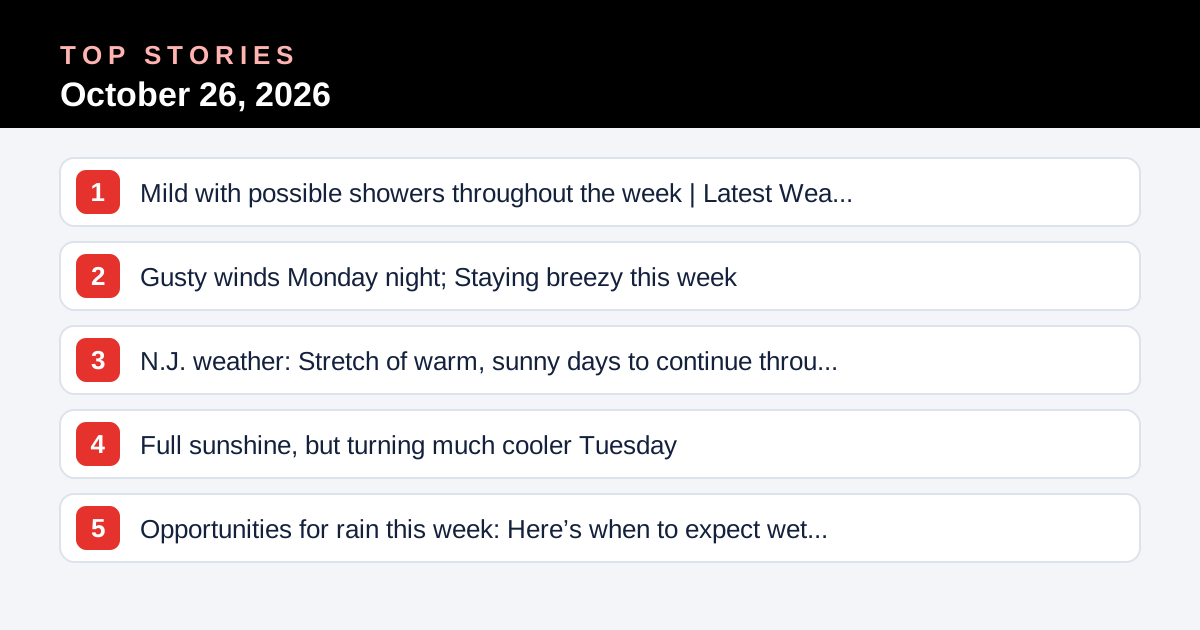
Mild with possible showers throughout the week | Latest Weather Forecast
Channel 3000 reported this story on Oct 26, 2026 under the headline "Mild with possible showers throughout the week | Latest Weather Forecast". When a story trends, the first version many people see is a screenshot of the headline rather than the article itself. Updates are common as new information arrives, so the original page may now say more than the headline did. We include it here because it was widely reported, not because we have verified every detail.
Source: Channel 3000, Oct 26, 2026
Gusty winds Monday night; Staying breezy this week
Gulf Coast News and Weather ran this item on Oct 26, 2026 with the headline "Gusty winds Monday night; Staying breezy this week". Short headlines are built to be understood at a glance, which is why they travel so well on social media. A good habit is to read past the first paragraph and look for named sources and clear dates.
Source: Gulf Coast News and Weather, Oct 26, 2026
N.J. weather: Stretch of warm, sunny days to continue through Halloween. Latest forecast.
NJ.com ran this item on Oct 26, 2026 with the headline "N.J. weather: Stretch of warm, sunny days to continue through Halloween. Latest forecast.". When a story trends, the first version many people see is a screenshot of the headline rather than the article itself. Before sharing, it helps to open the linked report and check who wrote it and when it was published.
Source: NJ.com, Oct 26, 2026
Full sunshine, but turning much cooler Tuesday
Under the headline "Full sunshine, but turning much cooler Tuesday", WPTZ covered this story on Oct 26, 2026. Headlines like this spread quickly because readers often share them before opening the full article. A good habit is to read past the first paragraph and look for named sources and clear dates.
Source: WPTZ, Oct 26, 2026
Opportunities for rain this week: Here’s when to expect wet weather
The headline "Opportunities for rain this week: Here’s when to expect wet weather" appeared on Oct 26, 2026 from KSAT. When a story trends, the first version many people see is a screenshot of the headline rather than the article itself. A good habit is to read past the first paragraph and look for named sources and clear dates. The full article is the place to find names, numbers, and quotes, none of which are repeated here.
Source: KSAT, Oct 26, 2026
Warm weather continues across the Tri-State
WCPO 9 Cincinnati ran this item on Oct 26, 2026 with the headline "Warm weather continues across the Tri-State". Interest in a story often grows when several outlets cover it at once, which makes it feel bigger than any single report. A good habit is to read past the first paragraph and look for named sources and clear dates. The full article is the place to find names, numbers, and quotes, none of which are repeated here.
Source: WCPO 9 Cincinnati, Oct 26, 2026
Halloween forecast for New York: Will it rain or be cold for trick-or-treating?
On Oct 26, 2026, Democrat and Chronicle published a report headlined "Halloween forecast for New York: Will it rain or be cold for trick-or-treating?". Short headlines are built to be understood at a glance, which is why they travel so well on social media. A good habit is to read past the first paragraph and look for named sources and clear dates.
Source: Democrat and Chronicle, Oct 26, 2026
Cloudy north, brighter and warmer south Monday afternoon
WPTZ ran this item on Oct 26, 2026 with the headline "Cloudy north, brighter and warmer south Monday afternoon". A headline can only hold a fraction of a story, so the full report usually contains context that a headline leaves out. If the story matters to you, compare it with a second outlet to see whether the main points match.
Source: WPTZ, Oct 26, 2026
Latest Weather | Nice mornings, warm afternoons continue with possible rain on Halloween
The headline "Latest Weather | Nice mornings, warm afternoons continue with possible rain on Halloween" appeared on Oct 26, 2026 from 5newsonline.com. Headlines like this spread quickly because readers often share them before opening the full article. Updates are common as new information arrives, so the original page may now say more than the headline did. This is one of the stories people have been talking about, and the source link below leads to the full report.
Source: 5newsonline.com, Oct 26, 2026
King tides, coastal flooding and road closures: Boynton Beach, Florida
The Weather Channel reported this story on Oct 26, 2026 under the headline "King tides, coastal flooding and road closures: Boynton Beach, Florida". When a story trends, the first version many people see is a screenshot of the headline rather than the article itself. A good habit is to read past the first paragraph and look for named sources and clear dates.
Source: The Weather Channel, Oct 26, 2026
Emergency weather alerts may be sent via satellite under new ‘Mystic Alerts Act’
Under the headline "Emergency weather alerts may be sent via satellite under new ‘Mystic Alerts Act’", KSAT covered this story on Oct 26, 2026. Headlines like this spread quickly because readers often share them before opening the full article. Updates are common as new information arrives, so the original page may now say more than the headline did.
Source: KSAT, Oct 26, 2026
Santa Fe tornado: Rare EF1 hits New Mexico city
The Weather Channel ran this item on Oct 26, 2026 with the headline "Santa Fe tornado: Rare EF1 hits New Mexico city". Interest in a story often grows when several outlets cover it at once, which makes it feel bigger than any single report. Before sharing, it helps to open the linked report and check who wrote it and when it was published. The full article is the place to find names, numbers, and quotes, none of which are repeated here.
Source: The Weather Channel, Oct 26, 2026
Halloween 2026 forecast: Will it be cold or rainy?
The Weather Channel reported this story on Oct 26, 2026 under the headline "Halloween 2026 forecast: Will it be cold or rainy?". Interest in a story often grows when several outlets cover it at once, which makes it feel bigger than any single report. A good habit is to read past the first paragraph and look for named sources and clear dates.
Source: The Weather Channel, Oct 26, 2026
Colorado National Guard airlifts couple, pets from flooded RV
The Weather Channel ran this item on Oct 26, 2026 with the headline "Colorado National Guard airlifts couple, pets from flooded RV". When a story trends, the first version many people see is a screenshot of the headline rather than the article itself. Checking the publication date matters, because older stories sometimes resurface and look new.
Source: The Weather Channel, Oct 26, 2026
New weather warnings as third storm set to hit Scotland
BBC reported this story on Oct 26, 2026 under the headline "New weather warnings as third storm set to hit Scotland". Stories that touch everyday life tend to be passed along fast, even when only a few details are known. If the story matters to you, compare it with a second outlet to see whether the main points match.
Source: BBC, Oct 26, 2026
How Outlets Update Developing Stories
When events are still unfolding, reporters publish early versions and then update them as new facts arrive. That means a headline you saw this morning may have changed by the afternoon. Responsible outlets mark corrections and updates, usually near the top or bottom of the article. If you are following a developing story, check the original link again later instead of relying on a screenshot or a repost.
Why Numbers in Headlines Need Context
A number in a headline can sound precise while hiding important details. A figure may refer to a single place, a short period, or a particular definition that differs from what readers assume. Percentages can look large when the starting number is small, and totals can look small when spread across many people. The article itself usually explains what is being counted and how, which is why it is worth reading beyond the first line.
How Fact-Checkers Verify Viral Claims
Fact-checkers follow a simple routine. They find the original source of a claim, look for documents or recordings that support it, and ask whether the evidence matches what is being said. They also check dates and locations, because many viral posts mix real material with the wrong context. Readers can borrow the same habits: trace a claim back to where it started, look for primary sources such as official statements or court records, and be cautious when a post offers dramatic wording but no way to confirm it.
Why Some News Stories Go Viral
News goes viral when it is easy to understand, easy to share, and connected to something people already care about. Strong emotions such as surprise, worry, or pride make readers more likely to pass a story along. Timing matters too: a story that lands during a busy news day may be overlooked, while the same story on a quiet day can dominate every feed. None of this says whether a story is accurate, which is why careful readers separate how popular a headline is from how reliable its details are.
Spotting Misleading Images and Clips
Photos and short videos spread faster than text, and they are also easy to reuse out of context. An image that appears to show a current event may be older, from another place, or edited. Reverse image search tools and the original publisher's page can help confirm where a picture came from. If a striking image has no clear source, treat it with caution until a reliable outlet confirms it.
How to Check a Headline Before You Share It
Start with the outlet. Is it a known publication with a named newsroom and a way to contact it? Then look at the date, the author, and the sources the article quotes. Read beyond the headline, because headlines are written to attract attention and can leave out important limits. If something sounds surprising, search for the same story on another outlet. When several independent reports agree on the main facts, that is a good sign. When only one obscure page carries it, wait before sharing.
What to Remember About Viral Latest weather news News
These stories are a snapshot of what has been widely reported. Because details change, the linked articles are the best place for accurate and current information. Check back for new roundups as other stories rise through the news. Your attention is worth spending wisely. Follow outlets that publish corrections. Keep a list of sources you trust. Good habits make you a better reader. Share the link, not just the screenshot.
This roundup is compiled automatically from the linked news reports. Details may be incomplete or change; please read the original sources.