Viral Science news journal Stories Right Now: 20 Headlines Americans Are Reading
Viral science news journal stories rarely stay in one place. A single headline can move from a local website to national television and then to millions of screens within hours. Below is a roundup of recent headlines from across the USA, each linked to the original report so you can read the full story yourself.
Please treat this page as a map rather than the territory. The headlines are real and linked, but each one is only a summary of a longer report. Details can change as outlets update their coverage, so the original source is always the best place to check the latest facts.
How This Roundup Is Put Together
Headlines in this roundup come from public news feeds covering a wide range of outlets. Duplicates are removed, each item keeps its source name and publication date, and every headline is linked to the original article so nothing here depends on trust in this page alone.
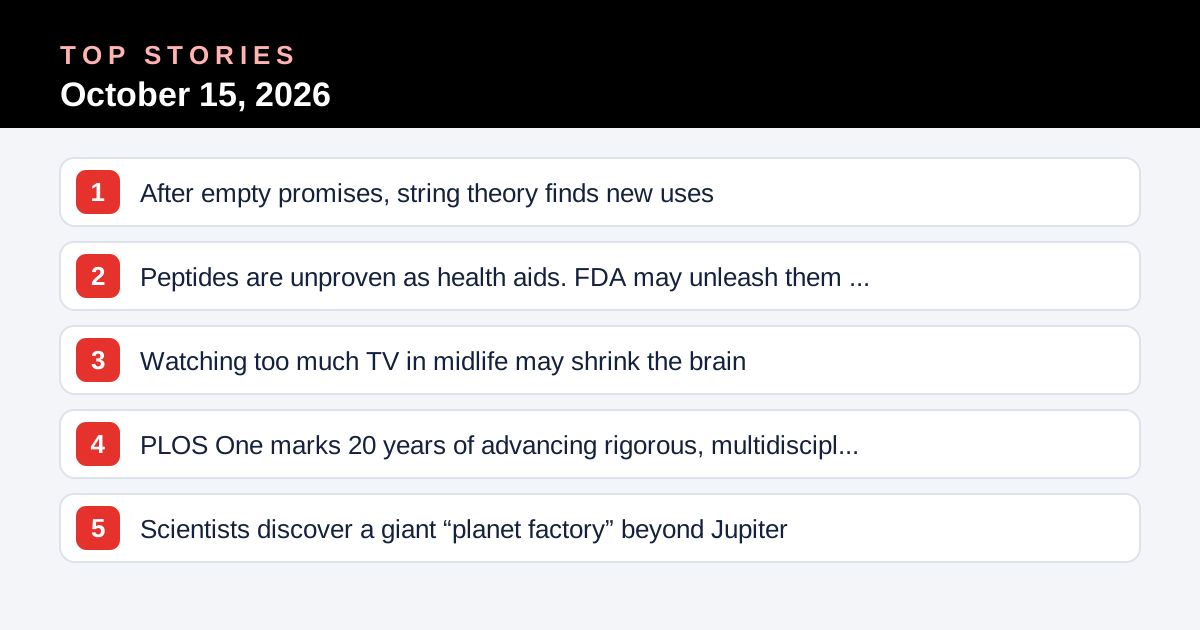
After empty promises, string theory finds new uses
Science | AAAS ran this item on Jun 3, 2026 with the headline "After empty promises, string theory finds new uses". Stories that touch everyday life tend to be passed along fast, even when only a few details are known. A good habit is to read past the first paragraph and look for named sources and clear dates. We include it here because it was widely reported, not because we have verified every detail.
Source: Science | AAAS, Jun 3, 2026
Peptides are unproven as health aids. FDA may unleash them anyway
Science News reported this story on May 1, 2026 under the headline "Peptides are unproven as health aids. FDA may unleash them anyway". Headlines like this spread quickly because readers often share them before opening the full article. Checking the publication date matters, because older stories sometimes resurface and look new. The full article is the place to find names, numbers, and quotes, none of which are repeated here.
Source: Science News, May 1, 2026
Watching too much TV in midlife may shrink the brain
Under the headline "Watching too much TV in midlife may shrink the brain", Science Daily covered this story on Jul 21, 2026. Stories that touch everyday life tend to be passed along fast, even when only a few details are known. Readers who want details should follow the link, because this summary does not replace the original reporting.
Source: Science Daily, Jul 21, 2026
PLOS One marks 20 years of advancing rigorous, multidisciplinary open science
The headline "PLOS One marks 20 years of advancing rigorous, multidisciplinary open science" appeared on May 20, 2026 from EurekAlert! Science News Releases. Headlines like this spread quickly because readers often share them before opening the full article. Checking the publication date matters, because older stories sometimes resurface and look new.
Source: EurekAlert! Science News Releases, May 20, 2026
Scientists discover a giant “planet factory” beyond Jupiter
The headline "Scientists discover a giant “planet factory” beyond Jupiter" appeared on May 26, 2026 from Science Daily. Stories that touch everyday life tend to be passed along fast, even when only a few details are known. Before sharing, it helps to open the linked report and check who wrote it and when it was published.
Source: Science Daily, May 26, 2026
Rare goblin shark filmed alive for the first time in the deep sea
Science Daily ran this item on Jul 8, 2026 with the headline "Rare goblin shark filmed alive for the first time in the deep sea". Interest in a story often grows when several outlets cover it at once, which makes it feel bigger than any single report. Readers who want details should follow the link, because this summary does not replace the original reporting.
Source: Science Daily, Jul 8, 2026
Alien messages may have reached Earth without us realizing it
Science Daily ran this item on Jun 16, 2026 with the headline "Alien messages may have reached Earth without us realizing it". A headline can only hold a fraction of a story, so the full report usually contains context that a headline leaves out. Before sharing, it helps to open the linked report and check who wrote it and when it was published. The full article is the place to find names, numbers, and quotes, none of which are repeated here.
Source: Science Daily, Jun 16, 2026
Scientists say travel could slow aging and boost your health
Science Daily ran this item on May 4, 2026 with the headline "Scientists say travel could slow aging and boost your health". Headlines like this spread quickly because readers often share them before opening the full article. Readers who want details should follow the link, because this summary does not replace the original reporting.
Source: Science Daily, May 4, 2026
Chinese sodium battery surprised scientists by matching key Tesla benchmarks
The headline "Chinese sodium battery surprised scientists by matching key Tesla benchmarks" appeared on Jun 21, 2026 from Science Daily. A headline can only hold a fraction of a story, so the full report usually contains context that a headline leaves out. Before sharing, it helps to open the linked report and check who wrote it and when it was published. This is one of the stories people have been talking about, and the source link below leads to the full report.
Source: Science Daily, Jun 21, 2026
How much of the scientific literature is generated by AI?
Nature reported this story on May 5, 2026 under the headline "How much of the scientific literature is generated by AI?". Headlines like this spread quickly because readers often share them before opening the full article. Checking the publication date matters, because older stories sometimes resurface and look new.
Source: Nature, May 5, 2026
Will science scandals ruin reputation of century-old journal Nature in China?
Under the headline "Will science scandals ruin reputation of century-old journal Nature in China?", South China Morning Post covered this story on May 22, 2026. When a story trends, the first version many people see is a screenshot of the headline rather than the article itself. Updates are common as new information arrives, so the original page may now say more than the headline did. The full article is the place to find names, numbers, and quotes, none of which are repeated here.
Source: South China Morning Post, May 22, 2026
This is how we found ‘The Heaven Sword,’ East Asia’s tallest tree after years of looking
On Jun 5, 2026, Frontiers published a report headlined "This is how we found ‘The Heaven Sword,’ East Asia’s tallest tree after years of looking". A headline can only hold a fraction of a story, so the full report usually contains context that a headline leaves out. Before sharing, it helps to open the linked report and check who wrote it and when it was published.
Source: Frontiers, Jun 5, 2026
AI is starting to beat doctors at making correct diagnoses
On Apr 30, 2026, Science | AAAS published a report headlined "AI is starting to beat doctors at making correct diagnoses". When a story trends, the first version many people see is a screenshot of the headline rather than the article itself. A good habit is to read past the first paragraph and look for named sources and clear dates. The full article is the place to find names, numbers, and quotes, none of which are repeated here.
Source: Science | AAAS, Apr 30, 2026
New tectonic plate boundary could be forming in Zambia, scientists say
Frontiers ran this item on May 12, 2026 with the headline "New tectonic plate boundary could be forming in Zambia, scientists say". Headlines like this spread quickly because readers often share them before opening the full article. A good habit is to read past the first paragraph and look for named sources and clear dates. We include it here because it was widely reported, not because we have verified every detail.
Source: Frontiers, May 12, 2026
Scientists say 8,500 steps a day could stop weight from creeping back
Science Daily ran this item on May 11, 2026 with the headline "Scientists say 8,500 steps a day could stop weight from creeping back". Interest in a story often grows when several outlets cover it at once, which makes it feel bigger than any single report. A good habit is to read past the first paragraph and look for named sources and clear dates. We include it here because it was widely reported, not because we have verified every detail.
Source: Science Daily, May 11, 2026
Scientists say they’ve reversed brain aging with a simple nasal spray
Science Daily reported this story on May 26, 2026 under the headline "Scientists say they’ve reversed brain aging with a simple nasal spray". When a story trends, the first version many people see is a screenshot of the headline rather than the article itself. If the story matters to you, compare it with a second outlet to see whether the main points match. The full article is the place to find names, numbers, and quotes, none of which are repeated here.
Source: Science Daily, May 26, 2026
Perfect pitch? Scientists lay new grounds for World Cup ‘26
The headline "Perfect pitch? Scientists lay new grounds for World Cup ‘26" appeared on May 13, 2026 from Science News Explores. Short headlines are built to be understood at a glance, which is why they travel so well on social media. Before sharing, it helps to open the linked report and check who wrote it and when it was published.
Source: Science News Explores, May 13, 2026
Animals can feel joy. Here’s how scientists might study it
Under the headline "Animals can feel joy. Here’s how scientists might study it", Science News Explores covered this story on Apr 30, 2026. A headline can only hold a fraction of a story, so the full report usually contains context that a headline leaves out. Updates are common as new information arrives, so the original page may now say more than the headline did.
Source: Science News Explores, Apr 30, 2026
Longevity Science Is Overhyped. But This Research Really Could Change Humanity.
The New York Times reported this story on May 1, 2026 under the headline "Longevity Science Is Overhyped. But This Research Really Could Change Humanity.". When a story trends, the first version many people see is a screenshot of the headline rather than the article itself. If the story matters to you, compare it with a second outlet to see whether the main points match.
Source: The New York Times, May 1, 2026
‘They weren’t burned by accident’: burned stone, child’s bones, and lost jewelry could reveal prehistoric mining camp high in the Pyrenees
Frontiers ran this item on May 5, 2026 with the headline "‘They weren’t burned by accident’: burned stone, child’s bones, and lost jewelry could reveal prehistoric mining camp high in the Pyrenees". When a story trends, the first version many people see is a screenshot of the headline rather than the article itself. Readers who want details should follow the link, because this summary does not replace the original reporting. This is one of the stories people have been talking about, and the source link below leads to the full report.
Source: Frontiers, May 5, 2026
The Bottom Line on Today's Viral Science news journal Stories
The headlines above show what many readers across the United States have been following. Each one links to the original report, which is where the facts, names, and quotes belong. Use this roundup as a quick guide, then read the sources that interest you. A little skepticism goes a long way. If you spot an error in a report, tell the outlet that published it. Read the source. One careful read beats ten quick scrolls. Different readers care about different stories, and that is normal.
This roundup is compiled automatically from the linked news reports. Details may be incomplete or change; please read the original sources.