Viral Reuters news analysis Stories Right Now: 18 Headlines Americans Are Reading
What are Americans reading and sharing right now? This guide to viral Reuters news analysis stories gathers real headlines from news outlets, credits every source by name, and explains how to read each one with a clear head. It is a starting point, not a replacement for the original reporting.
A note on how this page works: the headlines and outlet names below come directly from public news feeds. We do not add details that the reports do not state, and we do not claim to know more than the original journalists. When you want facts, names, numbers, or quotes, open the linked report.

How This Roundup Is Put Together
Headlines in this roundup come from public news feeds covering a wide range of outlets. Duplicates are removed, each item keeps its source name and publication date, and every headline is linked to the original article so nothing here depends on trust in this page alone.
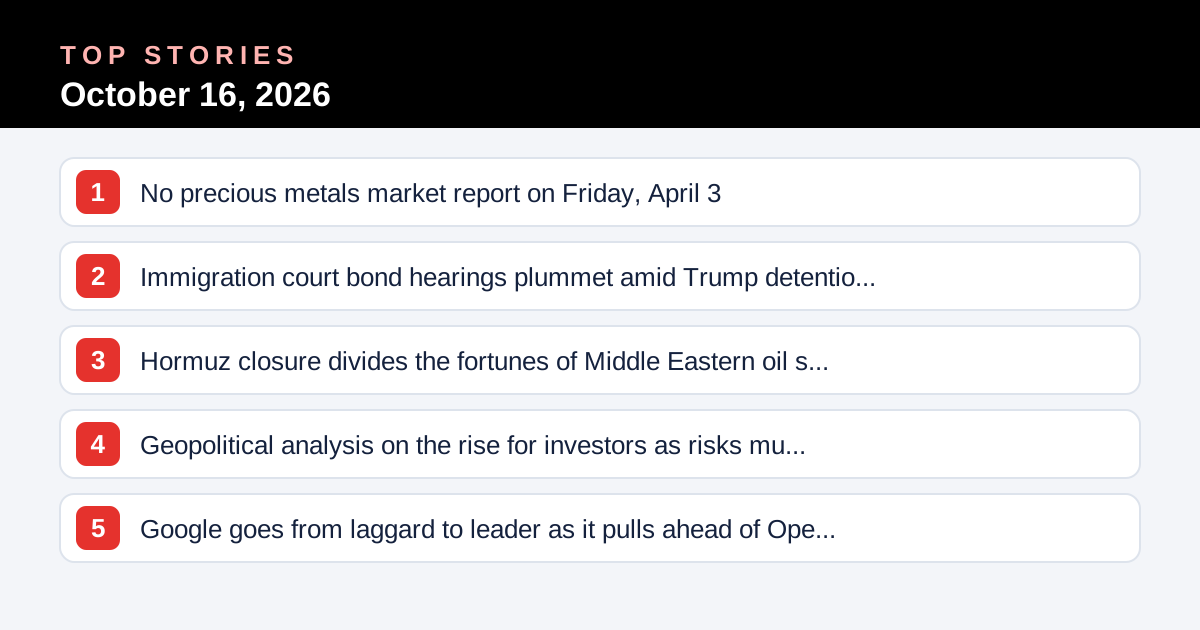
No precious metals market report on Friday, April 3
On Apr 2, 2026, Reuters published a report headlined "No precious metals market report on Friday, April 3". When a story trends, the first version many people see is a screenshot of the headline rather than the article itself. Before sharing, it helps to open the linked report and check who wrote it and when it was published.
Source: Reuters, Apr 2, 2026
Immigration court bond hearings plummet amid Trump detention policy, analysis finds
On Mar 23, 2026, Reuters published a report headlined "Immigration court bond hearings plummet amid Trump detention policy, analysis finds". Headlines like this spread quickly because readers often share them before opening the full article. If the story matters to you, compare it with a second outlet to see whether the main points match. This is one of the stories people have been talking about, and the source link below leads to the full report.
Source: Reuters, Mar 23, 2026
Hormuz closure divides the fortunes of Middle Eastern oil states
The headline "Hormuz closure divides the fortunes of Middle Eastern oil states" appeared on Apr 6, 2026 from Reuters. Interest in a story often grows when several outlets cover it at once, which makes it feel bigger than any single report. Checking the publication date matters, because older stories sometimes resurface and look new.
Source: Reuters, Apr 6, 2026
Geopolitical analysis on the rise for investors as risks multiply
Under the headline "Geopolitical analysis on the rise for investors as risks multiply", Reuters covered this story on Jan 23, 2026. Interest in a story often grows when several outlets cover it at once, which makes it feel bigger than any single report. Updates are common as new information arrives, so the original page may now say more than the headline did. This is one of the stories people have been talking about, and the source link below leads to the full report.
Source: Reuters, Jan 23, 2026
Google goes from laggard to leader as it pulls ahead of OpenAI with stellar AI growth
Reuters ran this item on Feb 5, 2026 with the headline "Google goes from laggard to leader as it pulls ahead of OpenAI with stellar AI growth". Stories that touch everyday life tend to be passed along fast, even when only a few details are known. Checking the publication date matters, because older stories sometimes resurface and look new.
Source: Reuters, Feb 5, 2026
Iran bets on endurance, energy disruption to outlast US, Israel
Reuters ran this item on Mar 9, 2026 with the headline "Iran bets on endurance, energy disruption to outlast US, Israel". When a story trends, the first version many people see is a screenshot of the headline rather than the article itself. A good habit is to read past the first paragraph and look for named sources and clear dates.
Source: Reuters, Mar 9, 2026
Geopolitical and tariff risk back with a bang for markets
Reuters ran this item on Jan 21, 2026 with the headline "Geopolitical and tariff risk back with a bang for markets". Interest in a story often grows when several outlets cover it at once, which makes it feel bigger than any single report. Checking the publication date matters, because older stories sometimes resurface and look new.
Source: Reuters, Jan 21, 2026
Oil closes at six-month high on US-Iran conflict worries
Reuters reported this story on Feb 19, 2026 under the headline "Oil closes at six-month high on US-Iran conflict worries". Interest in a story often grows when several outlets cover it at once, which makes it feel bigger than any single report. Before sharing, it helps to open the linked report and check who wrote it and when it was published. We include it here because it was widely reported, not because we have verified every detail.
Source: Reuters, Feb 19, 2026
Big Tech to invest about $650 billion in AI in 2026, Bridgewater says
Reuters ran this item on Feb 23, 2026 with the headline "Big Tech to invest about $650 billion in AI in 2026, Bridgewater says". When a story trends, the first version many people see is a screenshot of the headline rather than the article itself. A good habit is to read past the first paragraph and look for named sources and clear dates.
Source: Reuters, Feb 23, 2026
Investigators fan out in search of Nancy Guthrie, analyze discarded glove
On Feb 11, 2026, Reuters published a report headlined "Investigators fan out in search of Nancy Guthrie, analyze discarded glove". When a story trends, the first version many people see is a screenshot of the headline rather than the article itself. Updates are common as new information arrives, so the original page may now say more than the headline did.
Source: Reuters, Feb 11, 2026
Less than two years after stopping obesity drugs, weight and health issues return, study finds
Under the headline "Less than two years after stopping obesity drugs, weight and health issues return, study finds", Reuters covered this story on Jan 8, 2026. Short headlines are built to be understood at a glance, which is why they travel so well on social media. If the story matters to you, compare it with a second outlet to see whether the main points match. We include it here because it was widely reported, not because we have verified every detail.
Source: Reuters, Jan 8, 2026
Can AI realise its potential to pave the way for greener logistics?
On Jan 13, 2026, Reuters published a report headlined "Can AI realise its potential to pave the way for greener logistics?". A headline can only hold a fraction of a story, so the full report usually contains context that a headline leaves out. Updates are common as new information arrives, so the original page may now say more than the headline did.
Source: Reuters, Jan 13, 2026
Gold falls 1% as broad market sell-off follows US government reopening
The headline "Gold falls 1% as broad market sell-off follows US government reopening" appeared on Nov 12, 2025 from Reuters. A headline can only hold a fraction of a story, so the full report usually contains context that a headline leaves out. A good habit is to read past the first paragraph and look for named sources and clear dates.
Source: Reuters, Nov 12, 2025
AI assistants make widespread errors about the news, new research shows
On Oct 21, 2025, Reuters published a report headlined "AI assistants make widespread errors about the news, new research shows". Headlines like this spread quickly because readers often share them before opening the full article. Checking the publication date matters, because older stories sometimes resurface and look new. The full article is the place to find names, numbers, and quotes, none of which are repeated here.
Source: Reuters, Oct 21, 2025
Analysis: Shipping climate plan delay could sink clean fuel projects
Reuters ran this item on Oct 27, 2025 with the headline "Analysis: Shipping climate plan delay could sink clean fuel projects". Interest in a story often grows when several outlets cover it at once, which makes it feel bigger than any single report. Readers who want details should follow the link, because this summary does not replace the original reporting.
Source: Reuters, Oct 27, 2025
In Trump 2.0, MAGA-aligned influencers and media emerge as the new mainstream
Under the headline "In Trump 2.0, MAGA-aligned influencers and media emerge as the new mainstream", Reuters covered this story on Nov 8, 2025. Stories that touch everyday life tend to be passed along fast, even when only a few details are known. A good habit is to read past the first paragraph and look for named sources and clear dates.
Source: Reuters, Nov 8, 2025
Inside the Trump family’s global crypto cash machine
Reuters reported this story on Oct 28, 2025 under the headline "Inside the Trump family’s global crypto cash machine". Short headlines are built to be understood at a glance, which is why they travel so well on social media. Before sharing, it helps to open the linked report and check who wrote it and when it was published. The full article is the place to find names, numbers, and quotes, none of which are repeated here.
Source: Reuters, Oct 28, 2025
Banksy Identified By Reuters News Agency – Who Cares Wins
Under the headline "Banksy Identified By Reuters News Agency – Who Cares Wins", Artlyst covered this story on Mar 19, 2026. When a story trends, the first version many people see is a screenshot of the headline rather than the article itself. If the story matters to you, compare it with a second outlet to see whether the main points match.
Source: Artlyst, Mar 19, 2026
Local Stories That Become National News
Many stories that trend nationally begin as local reports from a small newsroom. A video, a court filing, or a community event catches attention, gets shared widely, and is then picked up by larger outlets. Local reporters often have the best details, so the original local article is worth reading when you can find it. National summaries sometimes repeat the key points but skip the background that residents know well.
Reading News Calmly in a Busy Feed
It is easy to feel that every trending story needs an immediate reaction. In practice, most stories become clearer after a few hours, when more details are confirmed. Choosing a few trusted outlets, setting aside time to read, and avoiding the urge to share half-read headlines can make the news feel less overwhelming. A short pause before sharing also helps limit the spread of mistakes.
Corrections and Retractions: Signs of a Healthy Newsroom
Every newsroom makes mistakes, and what matters is how they are handled. Reliable outlets publish clear corrections, explain what changed, and keep the original page available with a note. If an article has been quietly changed with no explanation, or an error is repeated across many pages, that can be a warning sign. When you see a visible corrections policy, it shows that the outlet is willing to be held accountable by its readers.
The Role of Social Media in Spreading News
Social platforms reward content that earns quick reactions, so dramatic headlines often travel farther than quiet, detailed ones. A story can reach millions of people before anyone has read the whole thing. Algorithms also show readers more of what they already engage with, which can make a topic feel larger than it is. Stepping outside your feed and visiting news sites directly is a simple way to get a more balanced picture.
The Bottom Line on Today's Viral Reuters news analysis Stories
The headlines above show what many readers across the United States have been following. Each one links to the original report, which is where the facts, names, and quotes belong. Use this roundup as a quick guide, then read the sources that interest you.
This roundup is compiled automatically from the linked news reports. Details may be incomplete or change; please read the original sources.