Viral Online health news Stories Right Now: 14 Headlines Americans Are Reading
Viral online health news stories rarely stay in one place. A single headline can move from a local website to national television and then to millions of screens within hours. Below is a roundup of recent headlines from across the USA, each linked to the original report so you can read the full story yourself.
Please treat this page as a map rather than the territory. The headlines are real and linked, but each one is only a summary of a longer report. Details can change as outlets update their coverage, so the original source is always the best place to check the latest facts.
Where These Headlines Come From
The stories below were found through public news feeds that list headlines from many outlets. We look for recent reports that match the topic, skip repeats of the same story, and keep the outlet name and date next to each headline so you can judge the source for yourself.
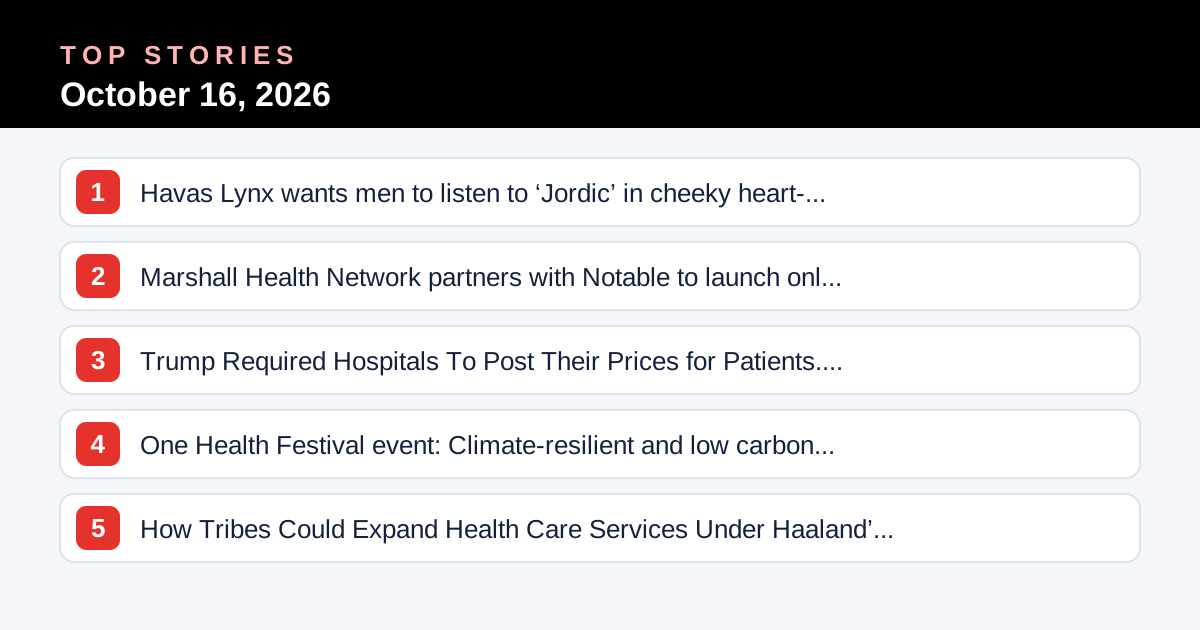
Havas Lynx wants men to listen to ‘Jordic’ in cheeky heart-health campaign
On Oct 16, 2026, Medical Marketing and Media published a report headlined "Havas Lynx wants men to listen to ‘Jordic’ in cheeky heart-health campaign". Stories that touch everyday life tend to be passed along fast, even when only a few details are known. Before sharing, it helps to open the linked report and check who wrote it and when it was published. This is one of the stories people have been talking about, and the source link below leads to the full report.
Source: Medical Marketing and Media, Oct 16, 2026
Marshall Health Network partners with Notable to launch online scheduling and registration platform
Marshall Health ran this item on Mar 18, 2026 with the headline "Marshall Health Network partners with Notable to launch online scheduling and registration platform". Stories that touch everyday life tend to be passed along fast, even when only a few details are known. Readers who want details should follow the link, because this summary does not replace the original reporting.
Source: Marshall Health, Mar 18, 2026
Trump Required Hospitals To Post Their Prices for Patients. Mostly It’s the Industry Using the Data.
KFF Health News ran this item on Feb 17, 2026 with the headline "Trump Required Hospitals To Post Their Prices for Patients. Mostly It’s the Industry Using the Data.". When a story trends, the first version many people see is a screenshot of the headline rather than the article itself. A good habit is to read past the first paragraph and look for named sources and clear dates.
Source: KFF Health News, Feb 17, 2026
One Health Festival event: Climate-resilient and low carbon health systems as a practical One Health solution
The headline "One Health Festival event: Climate-resilient and low carbon health systems as a practical One Health solution" appeared on Apr 9, 2026 from World Health Organization (WHO). Short headlines are built to be understood at a glance, which is why they travel so well on social media. Updates are common as new information arrives, so the original page may now say more than the headline did.
Source: World Health Organization (WHO), Apr 9, 2026
How Tribes Could Expand Health Care Services Under Haaland’s ‘Public Option’ Pitch to New Mexico Voters
On Apr 2, 2026, Native News Online published a report headlined "How Tribes Could Expand Health Care Services Under Haaland’s ‘Public Option’ Pitch to New Mexico Voters". Stories that touch everyday life tend to be passed along fast, even when only a few details are known. If the story matters to you, compare it with a second outlet to see whether the main points match.
Source: Native News Online, Apr 2, 2026
Diabetes, Food is Medicine, Best and Worst Healthcare | Health Equity Round-Up, May 4
Native News Online ran this item on May 4, 2026 with the headline "Diabetes, Food is Medicine, Best and Worst Healthcare | Health Equity Round-Up, May 4". When a story trends, the first version many people see is a screenshot of the headline rather than the article itself. Readers who want details should follow the link, because this summary does not replace the original reporting.
Source: Native News Online, May 4, 2026
Amazon One Medical’s weight management care is now available in 48 states and Washington, D.C.
About Amazon reported this story on Apr 21, 2026 under the headline "Amazon One Medical’s weight management care is now available in 48 states and Washington, D.C.". Stories that touch everyday life tend to be passed along fast, even when only a few details are known. Checking the publication date matters, because older stories sometimes resurface and look new. The full article is the place to find names, numbers, and quotes, none of which are repeated here.
Source: About Amazon, Apr 21, 2026
Where people get their news influences their beliefs about vaccines
The headline "Where people get their news influences their beliefs about vaccines" appeared on Apr 28, 2026 from Johns Hopkins University. A headline can only hold a fraction of a story, so the full report usually contains context that a headline leaves out. If the story matters to you, compare it with a second outlet to see whether the main points match. The full article is the place to find names, numbers, and quotes, none of which are repeated here.
Source: Johns Hopkins University, Apr 28, 2026
ALA releases free library programming toolkit for library workers to support online health literacy and selects twelve libraries for pilot program
On Mar 20, 2026, American Library Association published a report headlined "ALA releases free library programming toolkit for library workers to support online health literacy and selects twelve libraries for pilot program". Stories that touch everyday life tend to be passed along fast, even when only a few details are known. Updates are common as new information arrives, so the original page may now say more than the headline did. We include it here because it was widely reported, not because we have verified every detail.
Source: American Library Association, Mar 20, 2026
Health data of 500,000 members of a UK project offered for sale online in China
AP News ran this item on Apr 23, 2026 with the headline "Health data of 500,000 members of a UK project offered for sale online in China". A headline can only hold a fraction of a story, so the full report usually contains context that a headline leaves out. If the story matters to you, compare it with a second outlet to see whether the main points match.
Source: AP News, Apr 23, 2026
Tribal Leaders Demand Action as Health Care Crisis Grips Indian Country
On Mar 23, 2026, Native News Online published a report headlined "Tribal Leaders Demand Action as Health Care Crisis Grips Indian Country". When a story trends, the first version many people see is a screenshot of the headline rather than the article itself. Readers who want details should follow the link, because this summary does not replace the original reporting. This is one of the stories people have been talking about, and the source link below leads to the full report.
Source: Native News Online, Mar 23, 2026
UVA Health warns men about risks of hormone treatments promoted online
Under the headline "UVA Health warns men about risks of hormone treatments promoted online", cbs19news.com covered this story on Jun 8, 2026. Interest in a story often grows when several outlets cover it at once, which makes it feel bigger than any single report. Readers who want details should follow the link, because this summary does not replace the original reporting. This is one of the stories people have been talking about, and the source link below leads to the full report.
Source: cbs19news.com, Jun 8, 2026
2026 Edelman Trust Barometer: 70% of people hold at least one ‘divisive’ health belief
The headline "2026 Edelman Trust Barometer: 70% of people hold at least one ‘divisive’ health belief" appeared on Apr 22, 2026 from Medical Marketing and Media. Headlines like this spread quickly because readers often share them before opening the full article. A good habit is to read past the first paragraph and look for named sources and clear dates.
Source: Medical Marketing and Media, Apr 22, 2026
‘Our Culture is Prevention’
Under the headline "‘Our Culture is Prevention’", Native News Online covered this story on Feb 28, 2026. Stories that touch everyday life tend to be passed along fast, even when only a few details are known. If the story matters to you, compare it with a second outlet to see whether the main points match.
Source: Native News Online, Feb 28, 2026
Spotting Misleading Images and Clips
Photos and short videos spread faster than text, and they are also easy to reuse out of context. An image that appears to show a current event may be older, from another place, or edited. Reverse image search tools and the original publisher's page can help confirm where a picture came from. If a striking image has no clear source, treat it with caution until a reliable outlet confirms it.
How Fact-Checkers Verify Viral Claims
Fact-checkers follow a simple routine. They find the original source of a claim, look for documents or recordings that support it, and ask whether the evidence matches what is being said. They also check dates and locations, because many viral posts mix real material with the wrong context. Readers can borrow the same habits: trace a claim back to where it started, look for primary sources such as official statements or court records, and be cautious when a post offers dramatic wording but no way to confirm it.
Why Some News Stories Go Viral
News goes viral when it is easy to understand, easy to share, and connected to something people already care about. Strong emotions such as surprise, worry, or pride make readers more likely to pass a story along. Timing matters too: a story that lands during a busy news day may be overlooked, while the same story on a quiet day can dominate every feed. None of this says whether a story is accurate, which is why careful readers separate how popular a headline is from how reliable its details are.
How Publishing Times Affect What You See
The United States spans several time zones, so a story posted in the morning on the East Coast may reach the West Coast before anyone there has woken up. Outlets also schedule articles around peak reading hours, and platforms show posts at different moments to different people. As a result, two readers can see the same story at very different points in its life. Checking the publication date and time on the original page helps you understand how current a report really is.
Local Stories That Become National News
Many stories that trend nationally begin as local reports from a small newsroom. A video, a court filing, or a community event catches attention, gets shared widely, and is then picked up by larger outlets. Local reporters often have the best details, so the original local article is worth reading when you can find it. National summaries sometimes repeat the key points but skip the background that residents know well.
Final Thoughts on These Online health news Headlines
These stories are a snapshot of what has been widely reported. Because details change, the linked articles are the best place for accurate and current information. Check back for new roundups as other stories rise through the news. Small details often change the meaning of a headline. Try reading one story from two different outlets. Compare headlines with the articles they point to. Different readers care about different stories, and that is normal. Wait for confirmation on fast-moving events. Share the link, not just the screenshot. One careful read beats ten quick scrolls. Quality journalism depends on readers who value accuracy.
This roundup is compiled automatically from the linked news reports. Details may be incomplete or change; please read the original sources.