Viral News worldwide Stories Right Now: 15 Headlines Americans Are Reading
Viral news worldwide stories rarely stay in one place. A single headline can move from a local website to national television and then to millions of screens within hours. Below is a roundup of recent headlines from across the USA, each linked to the original report so you can read the full story yourself.
A note on how this page works: the headlines and outlet names below come directly from public news feeds. We do not add details that the reports do not state, and we do not claim to know more than the original journalists. When you want facts, names, numbers, or quotes, open the linked report.

How This Roundup Is Put Together
Headlines in this roundup come from public news feeds covering a wide range of outlets. Duplicates are removed, each item keeps its source name and publication date, and every headline is linked to the original article so nothing here depends on trust in this page alone.
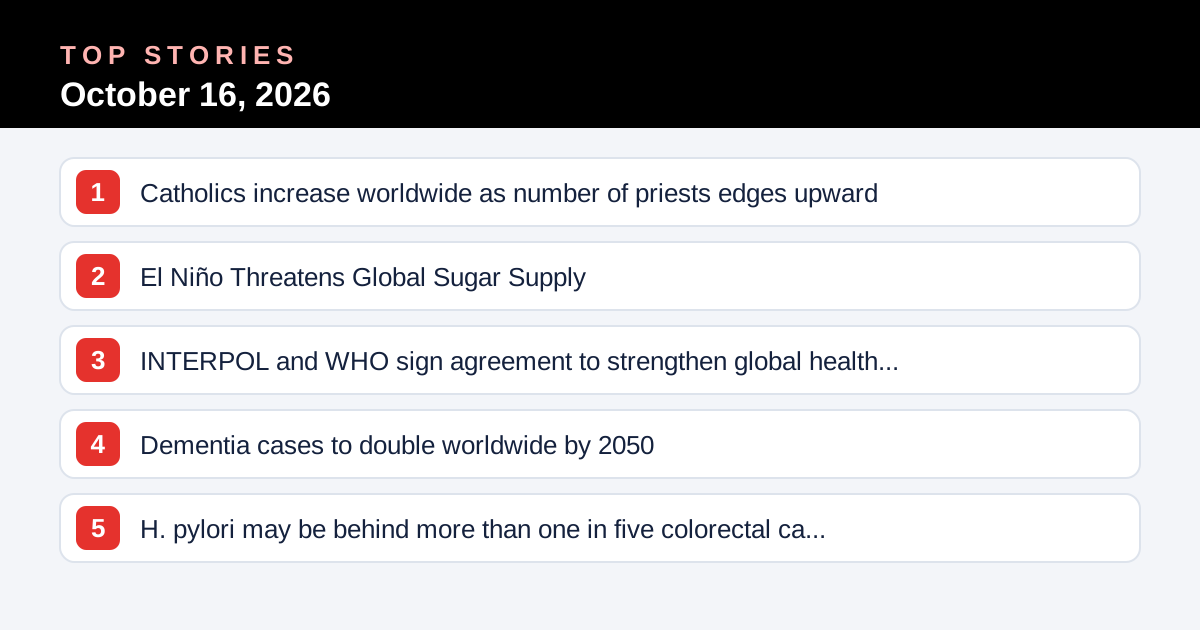
Catholics increase worldwide as number of priests edges upward
Under the headline "Catholics increase worldwide as number of priests edges upward", Vatican News covered this story on Oct 16, 2026. A headline can only hold a fraction of a story, so the full report usually contains context that a headline leaves out. Readers who want details should follow the link, because this summary does not replace the original reporting. We include it here because it was widely reported, not because we have verified every detail.
Source: Vatican News, Oct 16, 2026
El Niño Threatens Global Sugar Supply
On Oct 16, 2026, The New York Times published a report headlined "El Niño Threatens Global Sugar Supply". Short headlines are built to be understood at a glance, which is why they travel so well on social media. Readers who want details should follow the link, because this summary does not replace the original reporting.
Source: The New York Times, Oct 16, 2026
INTERPOL and WHO sign agreement to strengthen global health and security protection
On Oct 16, 2026, World Health Organization (WHO) published a report headlined "INTERPOL and WHO sign agreement to strengthen global health and security protection". Headlines like this spread quickly because readers often share them before opening the full article. If the story matters to you, compare it with a second outlet to see whether the main points match. The full article is the place to find names, numbers, and quotes, none of which are repeated here.
Source: World Health Organization (WHO), Oct 16, 2026
Dementia cases to double worldwide by 2050
WSMV reported this story on Oct 16, 2026 under the headline "Dementia cases to double worldwide by 2050". Headlines like this spread quickly because readers often share them before opening the full article. Checking the publication date matters, because older stories sometimes resurface and look new.
Source: WSMV, Oct 16, 2026
H. pylori may be behind more than one in five colorectal cancer cases worldwide
The headline "H. pylori may be behind more than one in five colorectal cancer cases worldwide" appeared on Oct 16, 2026 from healthcare-in-europe.com. A headline can only hold a fraction of a story, so the full report usually contains context that a headline leaves out. Before sharing, it helps to open the linked report and check who wrote it and when it was published.
Source: healthcare-in-europe.com, Oct 16, 2026
International Missionary Rosary to pray for Church and Pope on October 17
The headline "International Missionary Rosary to pray for Church and Pope on October 17" appeared on Oct 16, 2026 from Vatican News. Short headlines are built to be understood at a glance, which is why they travel so well on social media. A good habit is to read past the first paragraph and look for named sources and clear dates.
Source: Vatican News, Oct 16, 2026
BMO Capital Adjusts Price Target on C.H. Robinson Worldwide to $160 From $190
The headline "BMO Capital Adjusts Price Target on C.H. Robinson Worldwide to $160 From $190" appeared on Oct 16, 2026 from marketscreener.com. Headlines like this spread quickly because readers often share them before opening the full article. A good habit is to read past the first paragraph and look for named sources and clear dates. We include it here because it was widely reported, not because we have verified every detail.
Source: marketscreener.com, Oct 16, 2026
Worldwide Navigation Survey to Examine GPS Jamming
afloat.ie reported this story on Oct 16, 2026 under the headline "Worldwide Navigation Survey to Examine GPS Jamming". A headline can only hold a fraction of a story, so the full report usually contains context that a headline leaves out. Readers who want details should follow the link, because this summary does not replace the original reporting.
Source: afloat.ie, Oct 16, 2026
Biohaven and SK Biopharmaceuticals Enter into Strategic Global Licensing Agreement for Novel Kv7 Ion Channel Platform and Opakalim, Lead Candidate for Epilepsy
PR Newswire ran this item on Aug 26, 2026 with the headline "Biohaven and SK Biopharmaceuticals Enter into Strategic Global Licensing Agreement for Novel Kv7 Ion Channel Platform and Opakalim, Lead Candidate for Epilepsy". When a story trends, the first version many people see is a screenshot of the headline rather than the article itself. Readers who want details should follow the link, because this summary does not replace the original reporting.
Source: PR Newswire, Aug 26, 2026
The world just had the hottest August ever
On Sep 11, 2026, UN News published a report headlined "The world just had the hottest August ever". Short headlines are built to be understood at a glance, which is why they travel so well on social media. Before sharing, it helps to open the linked report and check who wrote it and when it was published.
Source: UN News, Sep 11, 2026
Butterflies worldwide are on the move as the climate warms
On Aug 11, 2026, Florida Museum of Natural History published a report headlined "Butterflies worldwide are on the move as the climate warms". Headlines like this spread quickly because readers often share them before opening the full article. Checking the publication date matters, because older stories sometimes resurface and look new. The full article is the place to find names, numbers, and quotes, none of which are repeated here.
Source: Florida Museum of Natural History, Aug 11, 2026
The World is Watching: University of Houston Surges to No. 52 in Worldwide Global Visibility
The headline "The World is Watching: University of Houston Surges to No. 52 in Worldwide Global Visibility" appeared on Aug 18, 2026 from University of Houston. Short headlines are built to be understood at a glance, which is why they travel so well on social media. Updates are common as new information arrives, so the original page may now say more than the headline did. The full article is the place to find names, numbers, and quotes, none of which are repeated here.
Source: University of Houston, Aug 18, 2026
State of the Climate: A Dimming, Overheated Planet, With Degraded Oceans
The headline "State of the Climate: A Dimming, Overheated Planet, With Degraded Oceans" appeared on Aug 10, 2026 from Inside Climate News. Headlines like this spread quickly because readers often share them before opening the full article. Checking the publication date matters, because older stories sometimes resurface and look new.
Source: Inside Climate News, Aug 10, 2026
How an MIT research project became a global programming language
MIT News reported this story on Aug 31, 2026 under the headline "How an MIT research project became a global programming language". When a story trends, the first version many people see is a screenshot of the headline rather than the article itself. Readers who want details should follow the link, because this summary does not replace the original reporting. We include it here because it was widely reported, not because we have verified every detail.
Source: MIT News, Aug 31, 2026
Carney pitches Canada to global investors amid trade war with Trump
PBS ran this item on Sep 14, 2026 with the headline "Carney pitches Canada to global investors amid trade war with Trump". Interest in a story often grows when several outlets cover it at once, which makes it feel bigger than any single report. A good habit is to read past the first paragraph and look for named sources and clear dates. We include it here because it was widely reported, not because we have verified every detail.
Source: PBS, Sep 14, 2026
How to Follow a Story Over Several Days
Big stories usually take days to settle. Early reports are often incomplete, follow-up reports add context, and later articles may correct earlier details. If you want to stay informed without being swamped, pick one or two reliable sources, read their updates once or twice a day, and ignore reposts that add no new information. This keeps you informed without chasing every alert.
Building a Balanced News Routine
A steady routine beats constant checking. Choose a small set of outlets with different strengths, such as a national newspaper, a wire service, and a local source. Read them at set times instead of reacting to every alert. Add an occasional source from outside your usual preferences to see how other readers view the same events. A balanced routine keeps you informed while leaving room for the rest of your day.
How Fact-Checkers Verify Viral Claims
Fact-checkers follow a simple routine. They find the original source of a claim, look for documents or recordings that support it, and ask whether the evidence matches what is being said. They also check dates and locations, because many viral posts mix real material with the wrong context. Readers can borrow the same habits: trace a claim back to where it started, look for primary sources such as official statements or court records, and be cautious when a post offers dramatic wording but no way to confirm it.
Headlines Versus the Full Story
A headline is a promise of a story, not the story. It has to be short, so it compresses events into a handful of words and often drops qualifiers such as who said something, what is still unknown, or what has changed since. Reading the full article usually shows more careful wording than the headline suggests. This is why the links in this roundup matter: they lead to the complete reports where those details live.
Spotting Misleading Images and Clips
Photos and short videos spread faster than text, and they are also easy to reuse out of context. An image that appears to show a current event may be older, from another place, or edited. Reverse image search tools and the original publisher's page can help confirm where a picture came from. If a striking image has no clear source, treat it with caution until a reliable outlet confirms it.
Why Numbers in Headlines Need Context
A number in a headline can sound precise while hiding important details. A figure may refer to a single place, a short period, or a particular definition that differs from what readers assume. Percentages can look large when the starting number is small, and totals can look small when spread across many people. The article itself usually explains what is being counted and how, which is why it is worth reading beyond the first line.
What to Remember About Viral News worldwide News
The headlines above show what many readers across the United States have been following. Each one links to the original report, which is where the facts, names, and quotes belong. Use this roundup as a quick guide, then read the sources that interest you. Stay curious. Your attention is worth spending wisely. Bookmark the stories you want to follow. Notice the difference between reporting and opinion. Different readers care about different stories, and that is normal. Small details often change the meaning of a headline.
This roundup is compiled automatically from the linked news reports. Details may be incomplete or change; please read the original sources.