Viral News around the world Stories Right Now: 10 Headlines Americans Are Reading
Every day, a handful of stories break out of the news cycle and end up on phones, group chats, and social feeds across the United States. This news around the world roundup collects headlines that were widely reported, links each one to the outlet that published it, and adds a little context about why stories like these travel so fast.
Please treat this page as a map rather than the territory. The headlines are real and linked, but each one is only a summary of a longer report. Details can change as outlets update their coverage, so the original source is always the best place to check the latest facts.

How These Stories Were Chosen
Headlines in this roundup come from public news feeds covering a wide range of outlets. Duplicates are removed, each item keeps its source name and publication date, and every headline is linked to the original article so nothing here depends on trust in this page alone.
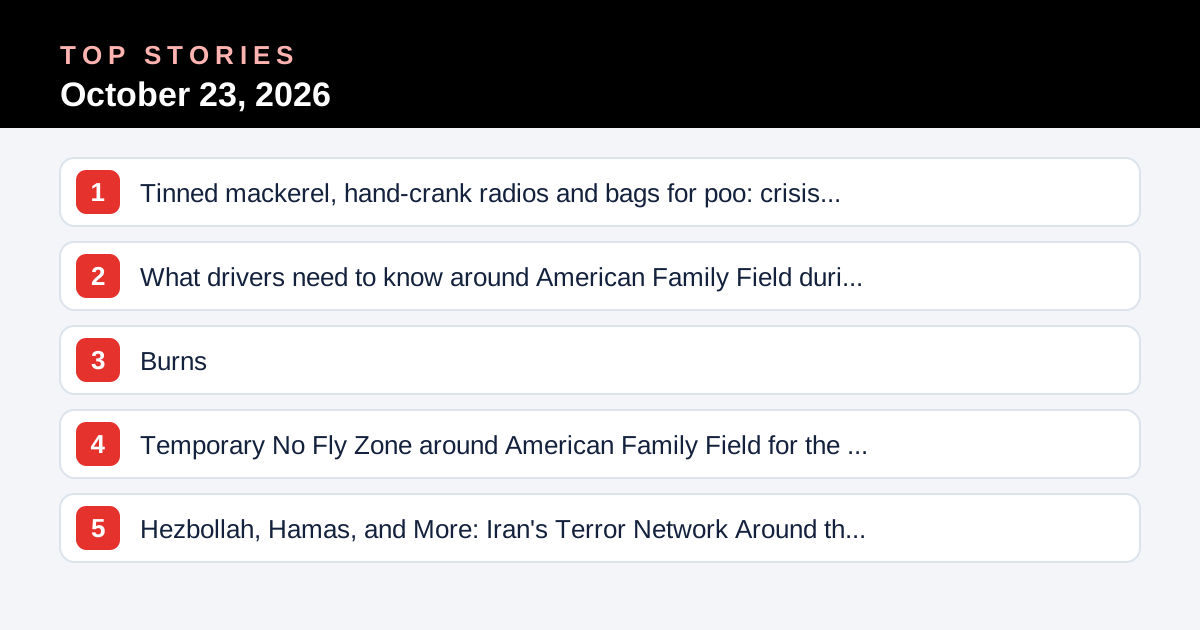
Tinned mackerel, hand-crank radios and bags for poo: crisis-prepping guides around the world
The Guardian ran this item on Oct 23, 2026 with the headline "Tinned mackerel, hand-crank radios and bags for poo: crisis-prepping guides around the world". A headline can only hold a fraction of a story, so the full report usually contains context that a headline leaves out. Before sharing, it helps to open the linked report and check who wrote it and when it was published. The full article is the place to find names, numbers, and quotes, none of which are repeated here.
Source: The Guardian, Oct 23, 2026
What drivers need to know around American Family Field during the World Series
WTMJ reported this story on Oct 23, 2026 under the headline "What drivers need to know around American Family Field during the World Series". Interest in a story often grows when several outlets cover it at once, which makes it feel bigger than any single report. If the story matters to you, compare it with a second outlet to see whether the main points match. The full article is the place to find names, numbers, and quotes, none of which are repeated here.
Source: WTMJ, Oct 23, 2026
Burns
World Health Organization (WHO) reported this story on Oct 21, 2026 under the headline "Burns". Short headlines are built to be understood at a glance, which is why they travel so well on social media. If the story matters to you, compare it with a second outlet to see whether the main points match. This is one of the stories people have been talking about, and the source link below leads to the full report.
Source: World Health Organization (WHO), Oct 21, 2026
Temporary No Fly Zone around American Family Field for the World Series
WTMJ reported this story on Oct 23, 2026 under the headline "Temporary No Fly Zone around American Family Field for the World Series". Short headlines are built to be understood at a glance, which is why they travel so well on social media. Updates are common as new information arrives, so the original page may now say more than the headline did.
Source: WTMJ, Oct 23, 2026
Hezbollah, Hamas, and More: Iran's Terror Network Around the Globe
American Jewish Committee reported this story on May 8, 2026 under the headline "Hezbollah, Hamas, and More: Iran's Terror Network Around the Globe". A headline can only hold a fraction of a story, so the full report usually contains context that a headline leaves out. Before sharing, it helps to open the linked report and check who wrote it and when it was published.
Source: American Jewish Committee, May 8, 2026
Middle East crisis disrupts international natural gas markets and delays global LNG supply wave
On Apr 24, 2026, IEA - International Energy Agency published a report headlined "Middle East crisis disrupts international natural gas markets and delays global LNG supply wave". Interest in a story often grows when several outlets cover it at once, which makes it feel bigger than any single report. Updates are common as new information arrives, so the original page may now say more than the headline did. This is one of the stories people have been talking about, and the source link below leads to the full report.
Source: IEA - International Energy Agency, Apr 24, 2026
Open Doors: Number of Christians persecuted worldwide rises to 388 million
The headline "Open Doors: Number of Christians persecuted worldwide rises to 388 million" appeared on Jan 15, 2026 from Vatican News. Headlines like this spread quickly because readers often share them before opening the full article. Checking the publication date matters, because older stories sometimes resurface and look new. This is one of the stories people have been talking about, and the source link below leads to the full report.
Source: Vatican News, Jan 15, 2026
Fuel rations and free buses: How countries have responded to rising oil prices
BBC ran this item on Apr 21, 2026 with the headline "Fuel rations and free buses: How countries have responded to rising oil prices". Stories that touch everyday life tend to be passed along fast, even when only a few details are known. Checking the publication date matters, because older stories sometimes resurface and look new. The full article is the place to find names, numbers, and quotes, none of which are repeated here.
Source: BBC, Apr 21, 2026
Extreme heat, cold, precipitation and fires mark the start of 2026
World Meteorological Organization WMO reported this story on Feb 10, 2026 under the headline "Extreme heat, cold, precipitation and fires mark the start of 2026". Interest in a story often grows when several outlets cover it at once, which makes it feel bigger than any single report. Before sharing, it helps to open the linked report and check who wrote it and when it was published.
Source: World Meteorological Organization WMO, Feb 10, 2026
World Enters New Era Of Water Crisis, UN Says
The headline "World Enters New Era Of Water Crisis, UN Says" appeared on Jan 28, 2026 from Health Policy Watch. Headlines like this spread quickly because readers often share them before opening the full article. A good habit is to read past the first paragraph and look for named sources and clear dates.
Source: Health Policy Watch, Jan 28, 2026
What a Trending Topic Does and Does Not Tell You
A trending label means many people are talking about something right now. It does not mean the topic is important, true, or new. Trends can be driven by a single post, a joke, or coordinated sharing. Use trends as a reason to look closer, then rely on the reporting itself, with named sources and clear dates, to understand what actually happened.
Why Context Matters More Than Speed
Being first to share a story is rarely as useful as being right. Context, such as what happened before, who is affected, and what is still unknown, is what turns a headline into understanding. Taking a few extra minutes to read the full report and a second source usually gives a far clearer picture than the first version that reaches your feed.
Reading News Calmly in a Busy Feed
It is easy to feel that every trending story needs an immediate reaction. In practice, most stories become clearer after a few hours, when more details are confirmed. Choosing a few trusted outlets, setting aside time to read, and avoiding the urge to share half-read headlines can make the news feel less overwhelming. A short pause before sharing also helps limit the spread of mistakes.
How Fact-Checkers Verify Viral Claims
Fact-checkers follow a simple routine. They find the original source of a claim, look for documents or recordings that support it, and ask whether the evidence matches what is being said. They also check dates and locations, because many viral posts mix real material with the wrong context. Readers can borrow the same habits: trace a claim back to where it started, look for primary sources such as official statements or court records, and be cautious when a post offers dramatic wording but no way to confirm it.
How to Check a Headline Before You Share It
Start with the outlet. Is it a known publication with a named newsroom and a way to contact it? Then look at the date, the author, and the sources the article quotes. Read beyond the headline, because headlines are written to attract attention and can leave out important limits. If something sounds surprising, search for the same story on another outlet. When several independent reports agree on the main facts, that is a good sign. When only one obscure page carries it, wait before sharing.
Local Stories That Become National News
Many stories that trend nationally begin as local reports from a small newsroom. A video, a court filing, or a community event catches attention, gets shared widely, and is then picked up by larger outlets. Local reporters often have the best details, so the original local article is worth reading when you can find it. National summaries sometimes repeat the key points but skip the background that residents know well.
Why Old Stories Sometimes Resurface
Older articles often return to feeds when someone shares them without the original date. Because pages can look new, readers may believe an old event just happened. Related news, anniversaries, or a new development can also push earlier reports back into view. Before reacting to a story, look for the date near the headline and compare it with other coverage. If the details seem familiar, the story may simply be a repeat.
Why Some News Stories Go Viral
News goes viral when it is easy to understand, easy to share, and connected to something people already care about. Strong emotions such as surprise, worry, or pride make readers more likely to pass a story along. Timing matters too: a story that lands during a busy news day may be overlooked, while the same story on a quiet day can dominate every feed. None of this says whether a story is accurate, which is why careful readers separate how popular a headline is from how reliable its details are.
Corrections and Retractions: Signs of a Healthy Newsroom
Every newsroom makes mistakes, and what matters is how they are handled. Reliable outlets publish clear corrections, explain what changed, and keep the original page available with a note. If an article has been quietly changed with no explanation, or an error is repeated across many pages, that can be a warning sign. When you see a visible corrections policy, it shows that the outlet is willing to be held accountable by its readers.
How Outlets Update Developing Stories
When events are still unfolding, reporters publish early versions and then update them as new facts arrive. That means a headline you saw this morning may have changed by the afternoon. Responsible outlets mark corrections and updates, usually near the top or bottom of the article. If you are following a developing story, check the original link again later instead of relying on a screenshot or a repost.
Opinion Pieces Versus News Reports
News reports aim to describe what happened, while opinion pieces argue for a point of view. Both can be valuable, but they should not be mixed up. Reputable outlets label opinion and analysis clearly. When a headline sounds more like a verdict than a description, check whether the article is an opinion column before treating its claims as settled facts.
The Bottom Line on Today's Viral News around the world Stories
The headlines above show what many readers across the United States have been following. Each one links to the original report, which is where the facts, names, and quotes belong. Use this roundup as a quick guide, then read the sources that interest you. Check the date.
This roundup is compiled automatically from the linked news reports. Details may be incomplete or change; please read the original sources.