Viral news analysis: 4 Trending Headlines From Across the USA
What are Americans reading and sharing right now? This guide to viral viral news analysis stories gathers real headlines from news outlets, credits every source by name, and explains how to read each one with a clear head. It is a starting point, not a replacement for the original reporting.
A note on how this page works: the headlines and outlet names below come directly from public news feeds. We do not add details that the reports do not state, and we do not claim to know more than the original journalists. When you want facts, names, numbers, or quotes, open the linked report.
How This Roundup Is Put Together
The stories below were found through public news feeds that list headlines from many outlets. We look for recent reports that match the topic, skip repeats of the same story, and keep the outlet name and date next to each headline so you can judge the source for yourself.
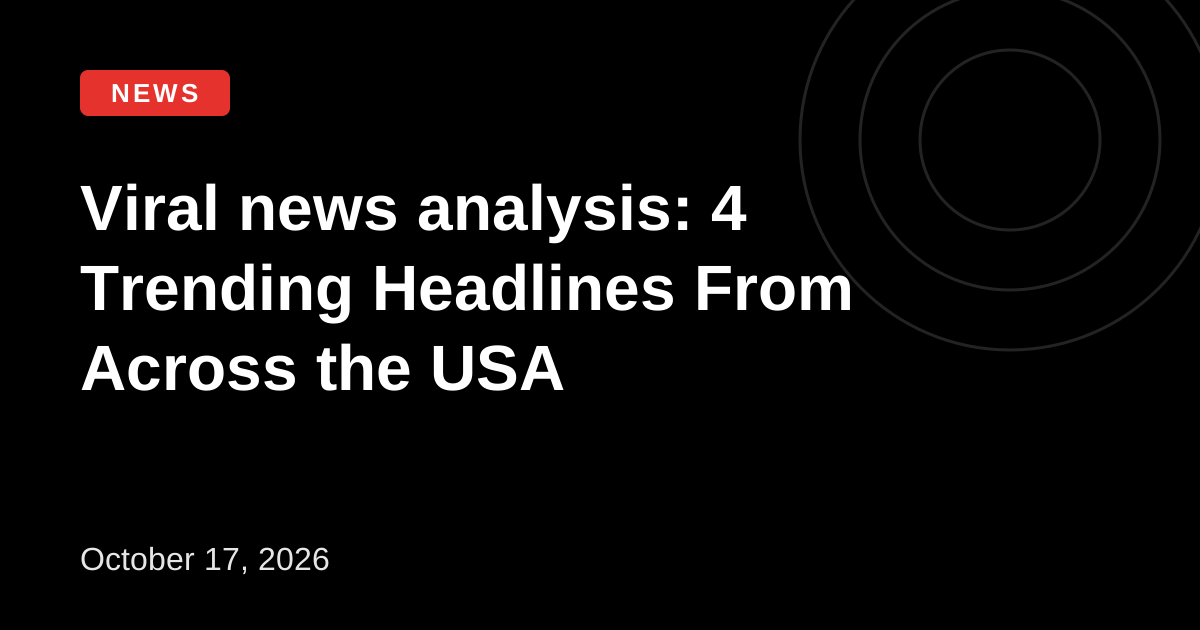
++)Full^videos Pori moni viral video maasranga tv viral video,
Universidad de Córdoba (UCO) reported this story on Oct 16, 2026 under the headline "++)Full^videos Pori moni viral video maasranga tv viral video,". A headline can only hold a fraction of a story, so the full report usually contains context that a headline leaves out. Before sharing, it helps to open the linked report and check who wrote it and when it was published.
Source: Universidad de Córdoba (UCO), Oct 16, 2026
Bryce Harper talks toothpaste, viral reaction to his TikTok video
The headline "Bryce Harper talks toothpaste, viral reaction to his TikTok video" appeared on May 27, 2026 from Phillies Nation. Stories that touch everyday life tend to be passed along fast, even when only a few details are known. Updates are common as new information arrives, so the original page may now say more than the headline did.
Source: Phillies Nation, May 27, 2026
Nigel Farage loses viral touch to Musk-backed Rupert Lowe
Financial Times reported this story on May 28, 2026 under the headline "Nigel Farage loses viral touch to Musk-backed Rupert Lowe". Short headlines are built to be understood at a glance, which is why they travel so well on social media. A good habit is to read past the first paragraph and look for named sources and clear dates.
Source: Financial Times, May 28, 2026
Viral monkey Punch rejected by mother given stuffed orangutan
Under the headline "Viral monkey Punch rejected by mother given stuffed orangutan", BBC covered this story on Feb 21, 2026. Short headlines are built to be understood at a glance, which is why they travel so well on social media. Checking the publication date matters, because older stories sometimes resurface and look new. The full article is the place to find names, numbers, and quotes, none of which are repeated here.
Source: BBC, Feb 21, 2026
Why Context Matters More Than Speed
Being first to share a story is rarely as useful as being right. Context, such as what happened before, who is affected, and what is still unknown, is what turns a headline into understanding. Taking a few extra minutes to read the full report and a second source usually gives a far clearer picture than the first version that reaches your feed.
How Publishing Times Affect What You See
The United States spans several time zones, so a story posted in the morning on the East Coast may reach the West Coast before anyone there has woken up. Outlets also schedule articles around peak reading hours, and platforms show posts at different moments to different people. As a result, two readers can see the same story at very different points in its life. Checking the publication date and time on the original page helps you understand how current a report really is.
Why Numbers in Headlines Need Context
A number in a headline can sound precise while hiding important details. A figure may refer to a single place, a short period, or a particular definition that differs from what readers assume. Percentages can look large when the starting number is small, and totals can look small when spread across many people. The article itself usually explains what is being counted and how, which is why it is worth reading beyond the first line.
Local Stories That Become National News
Many stories that trend nationally begin as local reports from a small newsroom. A video, a court filing, or a community event catches attention, gets shared widely, and is then picked up by larger outlets. Local reporters often have the best details, so the original local article is worth reading when you can find it. National summaries sometimes repeat the key points but skip the background that residents know well.
Understanding Anonymous Sources
Sometimes reporters rely on people who cannot be named, for example because they fear losing a job or facing retaliation. Responsible outlets explain why a source is unnamed and try to confirm information with more than one person or document. When you read a story built on unnamed sources, look for signs of that care, such as a description of the source's position and a note on how the claim was checked. Reports that give no explanation at all deserve extra caution.
Why Different Outlets Cover the Same Story Differently
Two outlets can report the same event and still emphasize different details. One may lead with the people involved, another with the numbers, a third with the reaction. These choices reflect audience, space, and editorial judgment. Reading more than one report is a practical way to see the full range of facts, and it makes it easier to notice when something is missing from a single account.
Opinion Pieces Versus News Reports
News reports aim to describe what happened, while opinion pieces argue for a point of view. Both can be valuable, but they should not be mixed up. Reputable outlets label opinion and analysis clearly. When a headline sounds more like a verdict than a description, check whether the article is an opinion column before treating its claims as settled facts.
Spotting Misleading Images and Clips
Photos and short videos spread faster than text, and they are also easy to reuse out of context. An image that appears to show a current event may be older, from another place, or edited. Reverse image search tools and the original publisher's page can help confirm where a picture came from. If a striking image has no clear source, treat it with caution until a reliable outlet confirms it.
Headlines Versus the Full Story
A headline is a promise of a story, not the story. It has to be short, so it compresses events into a handful of words and often drops qualifiers such as who said something, what is still unknown, or what has changed since. Reading the full article usually shows more careful wording than the headline suggests. This is why the links in this roundup matter: they lead to the complete reports where those details live.
Reading News Calmly in a Busy Feed
It is easy to feel that every trending story needs an immediate reaction. In practice, most stories become clearer after a few hours, when more details are confirmed. Choosing a few trusted outlets, setting aside time to read, and avoiding the urge to share half-read headlines can make the news feel less overwhelming. A short pause before sharing also helps limit the spread of mistakes.
The Role of Social Media in Spreading News
Social platforms reward content that earns quick reactions, so dramatic headlines often travel farther than quiet, detailed ones. A story can reach millions of people before anyone has read the whole thing. Algorithms also show readers more of what they already engage with, which can make a topic feel larger than it is. Stepping outside your feed and visiting news sites directly is a simple way to get a more balanced picture.
What a Trending Topic Does and Does Not Tell You
A trending label means many people are talking about something right now. It does not mean the topic is important, true, or new. Trends can be driven by a single post, a joke, or coordinated sharing. Use trends as a reason to look closer, then rely on the reporting itself, with named sources and clear dates, to understand what actually happened.
How to Check a Headline Before You Share It
Start with the outlet. Is it a known publication with a named newsroom and a way to contact it? Then look at the date, the author, and the sources the article quotes. Read beyond the headline, because headlines are written to attract attention and can leave out important limits. If something sounds surprising, search for the same story on another outlet. When several independent reports agree on the main facts, that is a good sign. When only one obscure page carries it, wait before sharing.
Corrections and Retractions: Signs of a Healthy Newsroom
Every newsroom makes mistakes, and what matters is how they are handled. Reliable outlets publish clear corrections, explain what changed, and keep the original page available with a note. If an article has been quietly changed with no explanation, or an error is repeated across many pages, that can be a warning sign. When you see a visible corrections policy, it shows that the outlet is willing to be held accountable by its readers.
How Outlets Update Developing Stories
When events are still unfolding, reporters publish early versions and then update them as new facts arrive. That means a headline you saw this morning may have changed by the afternoon. Responsible outlets mark corrections and updates, usually near the top or bottom of the article. If you are following a developing story, check the original link again later instead of relying on a screenshot or a repost.
Building a Balanced News Routine
A steady routine beats constant checking. Choose a small set of outlets with different strengths, such as a national newspaper, a wire service, and a local source. Read them at set times instead of reacting to every alert. Add an occasional source from outside your usual preferences to see how other readers view the same events. A balanced routine keeps you informed while leaving room for the rest of your day.
Why Old Stories Sometimes Resurface
Older articles often return to feeds when someone shares them without the original date. Because pages can look new, readers may believe an old event just happened. Related news, anniversaries, or a new development can also push earlier reports back into view. Before reacting to a story, look for the date near the headline and compare it with other coverage. If the details seem familiar, the story may simply be a repeat.
Why Some News Stories Go Viral
News goes viral when it is easy to understand, easy to share, and connected to something people already care about. Strong emotions such as surprise, worry, or pride make readers more likely to pass a story along. Timing matters too: a story that lands during a busy news day may be overlooked, while the same story on a quiet day can dominate every feed. None of this says whether a story is accurate, which is why careful readers separate how popular a headline is from how reliable its details are.
The Bottom Line on Today's Viral Viral news analysis Stories
These stories are a snapshot of what has been widely reported. Because details change, the linked articles are the best place for accurate and current information. Check back for new roundups as other stories rise through the news. Share the link, not just the screenshot. Stay curious. Compare headlines with the articles they point to. Look for named sources and clear dates. Quality journalism depends on readers who value accuracy. Read the source. A little skepticism goes a long way.
This roundup is compiled automatically from the linked news reports. Details may be incomplete or change; please read the original sources.