Viral BBC technology news Stories Right Now: 16 Headlines Americans Are Reading
What are Americans reading and sharing right now? This guide to viral BBC technology news stories gathers real headlines from news outlets, credits every source by name, and explains how to read each one with a clear head. It is a starting point, not a replacement for the original reporting.
A note on how this page works: the headlines and outlet names below come directly from public news feeds. We do not add details that the reports do not state, and we do not claim to know more than the original journalists. When you want facts, names, numbers, or quotes, open the linked report.
How This Roundup Is Put Together
Headlines in this roundup come from public news feeds covering a wide range of outlets. Duplicates are removed, each item keeps its source name and publication date, and every headline is linked to the original article so nothing here depends on trust in this page alone.
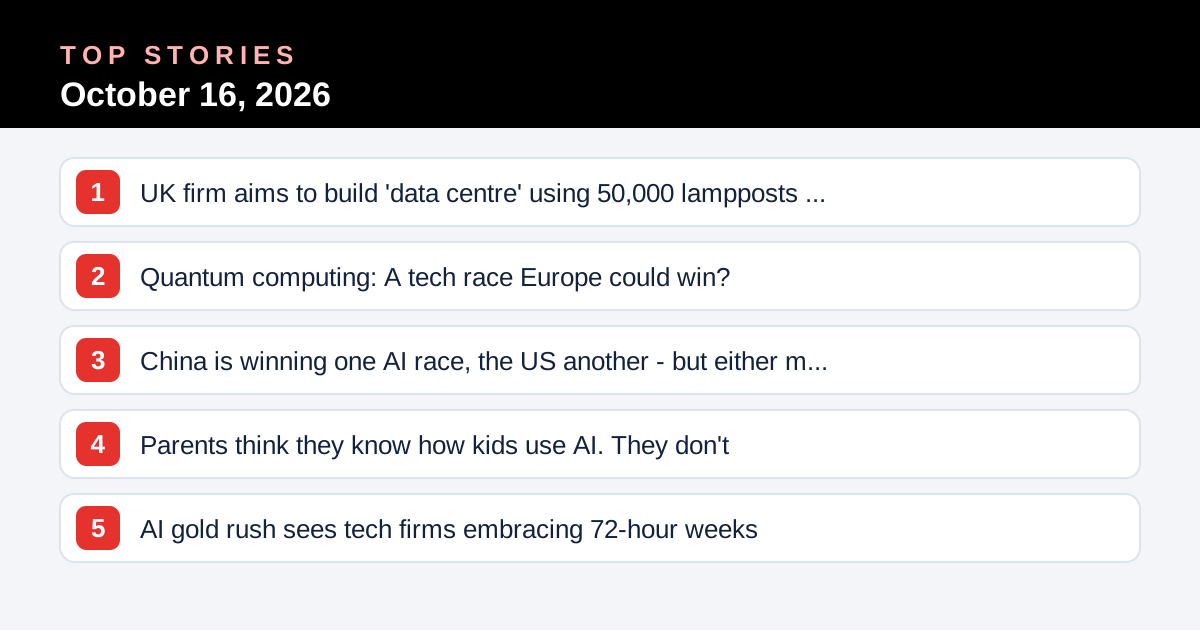
UK firm aims to build 'data centre' using 50,000 lampposts in Nigeria
BBC ran this item on May 1, 2026 with the headline "UK firm aims to build 'data centre' using 50,000 lampposts in Nigeria". A headline can only hold a fraction of a story, so the full report usually contains context that a headline leaves out. Checking the publication date matters, because older stories sometimes resurface and look new.
Source: BBC, May 1, 2026
Quantum computing: A tech race Europe could win?
The headline "Quantum computing: A tech race Europe could win?" appeared on Apr 13, 2026 from BBC. Stories that touch everyday life tend to be passed along fast, even when only a few details are known. A good habit is to read past the first paragraph and look for named sources and clear dates. This is one of the stories people have been talking about, and the source link below leads to the full report.
Source: BBC, Apr 13, 2026
China is winning one AI race, the US another - but either might pull ahead
BBC reported this story on Apr 7, 2026 under the headline "China is winning one AI race, the US another - but either might pull ahead". Interest in a story often grows when several outlets cover it at once, which makes it feel bigger than any single report. Updates are common as new information arrives, so the original page may now say more than the headline did.
Source: BBC, Apr 7, 2026
Parents think they know how kids use AI. They don't
BBC reported this story on Mar 18, 2026 under the headline "Parents think they know how kids use AI. They don't". When a story trends, the first version many people see is a screenshot of the headline rather than the article itself. Readers who want details should follow the link, because this summary does not replace the original reporting.
Source: BBC, Mar 18, 2026
AI gold rush sees tech firms embracing 72-hour weeks
BBC reported this story on Feb 9, 2026 under the headline "AI gold rush sees tech firms embracing 72-hour weeks". Stories that touch everyday life tend to be passed along fast, even when only a few details are known. Checking the publication date matters, because older stories sometimes resurface and look new.
Source: BBC, Feb 9, 2026
John Ternus' challenges as new Apple boss - AI, Trump and product launches
BBC reported this story on Apr 21, 2026 under the headline "John Ternus' challenges as new Apple boss - AI, Trump and product launches". When a story trends, the first version many people see is a screenshot of the headline rather than the article itself. Before sharing, it helps to open the linked report and check who wrote it and when it was published.
Source: BBC, Apr 21, 2026
How the sound of sport is being reimagined for deaf fans
The headline "How the sound of sport is being reimagined for deaf fans" appeared on Feb 16, 2026 from BBC. When a story trends, the first version many people see is a screenshot of the headline rather than the article itself. A good habit is to read past the first paragraph and look for named sources and clear dates.
Source: BBC, Feb 16, 2026
Why Chinese tech companies are racing to set up in Hong Kong
BBC ran this item on Mar 29, 2026 with the headline "Why Chinese tech companies are racing to set up in Hong Kong". When a story trends, the first version many people see is a screenshot of the headline rather than the article itself. If the story matters to you, compare it with a second outlet to see whether the main points match.
Source: BBC, Mar 29, 2026
Could India challenge tech boss power at Delhi AI Impact Summit?
BBC ran this item on Feb 17, 2026 with the headline "Could India challenge tech boss power at Delhi AI Impact Summit?". Short headlines are built to be understood at a glance, which is why they travel so well on social media. Updates are common as new information arrives, so the original page may now say more than the headline did. The full article is the place to find names, numbers, and quotes, none of which are repeated here.
Source: BBC, Feb 17, 2026
Trillions of miles of data: Your car is spying on you, and it's only just the beginning
BBC ran this item on May 13, 2026 with the headline "Trillions of miles of data: Your car is spying on you, and it's only just the beginning". Interest in a story often grows when several outlets cover it at once, which makes it feel bigger than any single report. Before sharing, it helps to open the linked report and check who wrote it and when it was published. We include it here because it was widely reported, not because we have verified every detail.
Source: BBC, May 13, 2026
HMRC announces 10-year contract with British AI company Quantexa
BBC reported this story on May 14, 2026 under the headline "HMRC announces 10-year contract with British AI company Quantexa". When a story trends, the first version many people see is a screenshot of the headline rather than the article itself. A good habit is to read past the first paragraph and look for named sources and clear dates.
Source: BBC, May 14, 2026
OpenAI pauses UK data centre deal over energy costs and regulation
On Apr 9, 2026, BBC published a report headlined "OpenAI pauses UK data centre deal over energy costs and regulation". When a story trends, the first version many people see is a screenshot of the headline rather than the article itself. A good habit is to read past the first paragraph and look for named sources and clear dates. We include it here because it was widely reported, not because we have verified every detail.
Source: BBC, Apr 9, 2026
White House memo claims mass AI theft by Chinese firms
Under the headline "White House memo claims mass AI theft by Chinese firms", BBC covered this story on Apr 24, 2026. Interest in a story often grows when several outlets cover it at once, which makes it feel bigger than any single report. Before sharing, it helps to open the linked report and check who wrote it and when it was published. The full article is the place to find names, numbers, and quotes, none of which are repeated here.
Source: BBC, Apr 24, 2026
AI toys for young children need tighter rules, researchers warn
BBC ran this item on Mar 13, 2026 with the headline "AI toys for young children need tighter rules, researchers warn". A headline can only hold a fraction of a story, so the full report usually contains context that a headline leaves out. Updates are common as new information arrives, so the original page may now say more than the headline did. We include it here because it was widely reported, not because we have verified every detail.
Source: BBC, Mar 13, 2026
The parents using play to stop children getting 'trapped' by screens
BBC reported this story on Apr 10, 2026 under the headline "The parents using play to stop children getting 'trapped' by screens". Headlines like this spread quickly because readers often share them before opening the full article. If the story matters to you, compare it with a second outlet to see whether the main points match. This is one of the stories people have been talking about, and the source link below leads to the full report.
Source: BBC, Apr 10, 2026
Poverty and technology leading to record levels of slavery in UK
Under the headline "Poverty and technology leading to record levels of slavery in UK", BBC covered this story on May 5, 2026. Stories that touch everyday life tend to be passed along fast, even when only a few details are known. Before sharing, it helps to open the linked report and check who wrote it and when it was published. The full article is the place to find names, numbers, and quotes, none of which are repeated here.
Source: BBC, May 5, 2026
How to Check a Headline Before You Share It
Start with the outlet. Is it a known publication with a named newsroom and a way to contact it? Then look at the date, the author, and the sources the article quotes. Read beyond the headline, because headlines are written to attract attention and can leave out important limits. If something sounds surprising, search for the same story on another outlet. When several independent reports agree on the main facts, that is a good sign. When only one obscure page carries it, wait before sharing.
How to Follow a Story Over Several Days
Big stories usually take days to settle. Early reports are often incomplete, follow-up reports add context, and later articles may correct earlier details. If you want to stay informed without being swamped, pick one or two reliable sources, read their updates once or twice a day, and ignore reposts that add no new information. This keeps you informed without chasing every alert.
Why Some News Stories Go Viral
News goes viral when it is easy to understand, easy to share, and connected to something people already care about. Strong emotions such as surprise, worry, or pride make readers more likely to pass a story along. Timing matters too: a story that lands during a busy news day may be overlooked, while the same story on a quiet day can dominate every feed. None of this says whether a story is accurate, which is why careful readers separate how popular a headline is from how reliable its details are.
Reading News Calmly in a Busy Feed
It is easy to feel that every trending story needs an immediate reaction. In practice, most stories become clearer after a few hours, when more details are confirmed. Choosing a few trusted outlets, setting aside time to read, and avoiding the urge to share half-read headlines can make the news feel less overwhelming. A short pause before sharing also helps limit the spread of mistakes.
Opinion Pieces Versus News Reports
News reports aim to describe what happened, while opinion pieces argue for a point of view. Both can be valuable, but they should not be mixed up. Reputable outlets label opinion and analysis clearly. When a headline sounds more like a verdict than a description, check whether the article is an opinion column before treating its claims as settled facts.
What to Remember About Viral BBC technology news News
The headlines above show what many readers across the United States have been following. Each one links to the original report, which is where the facts, names, and quotes belong. Use this roundup as a quick guide, then read the sources that interest you. Check the date. Facts first.
This roundup is compiled automatically from the linked news reports. Details may be incomplete or change; please read the original sources.