Science news publication: 20 Trending Headlines From Across the USA
Viral science news publication stories rarely stay in one place. A single headline can move from a local website to national television and then to millions of screens within hours. Below is a roundup of recent headlines from across the USA, each linked to the original report so you can read the full story yourself.
A note on how this page works: the headlines and outlet names below come directly from public news feeds. We do not add details that the reports do not state, and we do not claim to know more than the original journalists. When you want facts, names, numbers, or quotes, open the linked report.
How These Stories Were Chosen
The stories below were found through public news feeds that list headlines from many outlets. We look for recent reports that match the topic, skip repeats of the same story, and keep the outlet name and date next to each headline so you can judge the source for yourself.
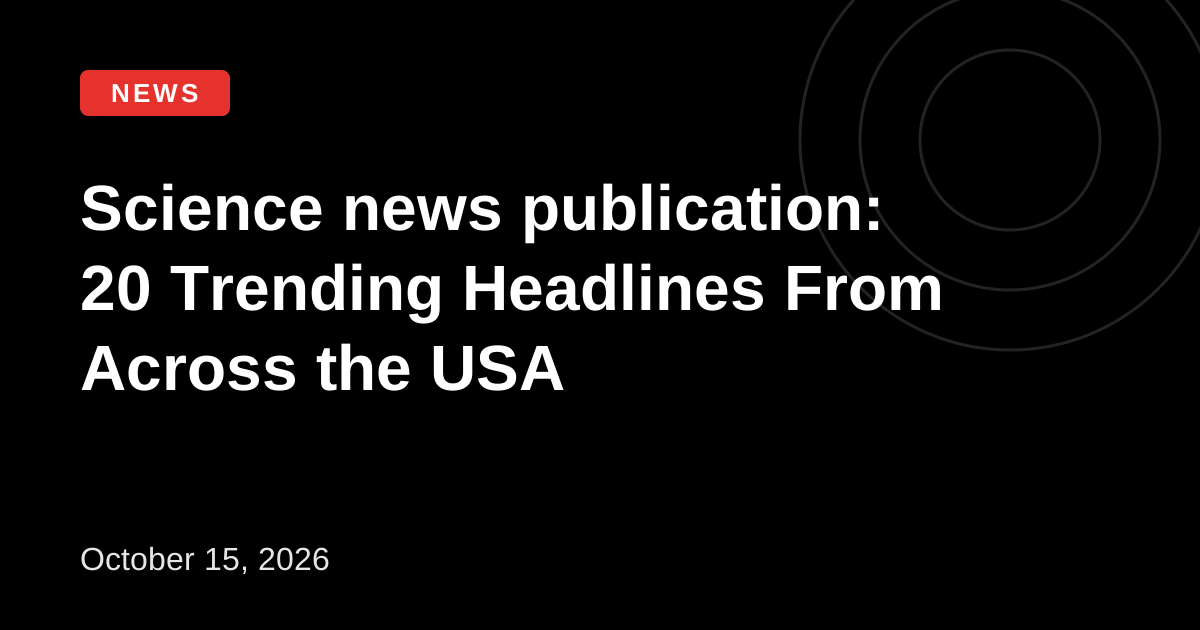
First evidence of Neandertal dentistry found in ancient molar
The headline "First evidence of Neandertal dentistry found in ancient molar" appeared on May 13, 2026 from Science News. Interest in a story often grows when several outlets cover it at once, which makes it feel bigger than any single report. Updates are common as new information arrives, so the original page may now say more than the headline did.
Source: Science News, May 13, 2026
How the community has rallied around marine scientists in their time of need | USF College of Marine Science
The headline "How the community has rallied around marine scientists in their time of need | USF College of Marine Science" appeared on Jun 29, 2026 from University of South Florida. When a story trends, the first version many people see is a screenshot of the headline rather than the article itself. Before sharing, it helps to open the linked report and check who wrote it and when it was published.
Source: University of South Florida, Jun 29, 2026
Science news this week: Ötzi the Iceman used to make sourdough, Italian teenagers discover Roman villa under school, Google plans to release 64 million mosquitos, and RIP to NASA's Maven probe
Live Science reported this story on Jun 6, 2026 under the headline "Science news this week: Ötzi the Iceman used to make sourdough, Italian teenagers discover Roman villa under school, Google plans to release 64 million mosquitos, and RIP to NASA's Maven probe". Stories that touch everyday life tend to be passed along fast, even when only a few details are known. A good habit is to read past the first paragraph and look for named sources and clear dates.
Source: Live Science, Jun 6, 2026
Claim that science is becoming less disruptive challenged after years-long publication delay
Under the headline "Claim that science is becoming less disruptive challenged after years-long publication delay", Phys.org covered this story on Aug 12, 2026. When a story trends, the first version many people see is a screenshot of the headline rather than the article itself. If the story matters to you, compare it with a second outlet to see whether the main points match. This is one of the stories people have been talking about, and the source link below leads to the full report.
Source: Phys.org, Aug 12, 2026
A rising percentage of U.S. teens aren’t getting enough sleep
On Mar 2, 2026, Science News published a report headlined "A rising percentage of U.S. teens aren’t getting enough sleep". Stories that touch everyday life tend to be passed along fast, even when only a few details are known. If the story matters to you, compare it with a second outlet to see whether the main points match.
Source: Science News, Mar 2, 2026
World’s leading science competition announces 25 international pioneers who can help humanity live within Earth’s boundaries
Frontiers ran this item on Apr 22, 2026 with the headline "World’s leading science competition announces 25 international pioneers who can help humanity live within Earth’s boundaries". A headline can only hold a fraction of a story, so the full report usually contains context that a headline leaves out. Readers who want details should follow the link, because this summary does not replace the original reporting. The full article is the place to find names, numbers, and quotes, none of which are repeated here.
Source: Frontiers, Apr 22, 2026
Scientific talent is global. Access to the world’s scientific stage is not.
On Aug 27, 2026, The Transmitter published a report headlined "Scientific talent is global. Access to the world’s scientific stage is not.". Stories that touch everyday life tend to be passed along fast, even when only a few details are known. A good habit is to read past the first paragraph and look for named sources and clear dates. We include it here because it was widely reported, not because we have verified every detail.
Source: The Transmitter, Aug 27, 2026
WATCH: Scientists release most detailed sun images ever
On Aug 6, 2026, PBS published a report headlined "WATCH: Scientists release most detailed sun images ever". A headline can only hold a fraction of a story, so the full report usually contains context that a headline leaves out. Readers who want details should follow the link, because this summary does not replace the original reporting.
Source: PBS, Aug 6, 2026
Battle over DNA within fertilized eggs may explain why some IVF procedures fail
Science | AAAS reported this story on Apr 29, 2026 under the headline "Battle over DNA within fertilized eggs may explain why some IVF procedures fail". A headline can only hold a fraction of a story, so the full report usually contains context that a headline leaves out. Before sharing, it helps to open the linked report and check who wrote it and when it was published.
Source: Science | AAAS, Apr 29, 2026
Who and what can we trust? Building trust in scholarly publishing
Under the headline "Who and what can we trust? Building trust in scholarly publishing", Frontiers covered this story on Jul 13, 2026. When a story trends, the first version many people see is a screenshot of the headline rather than the article itself. If the story matters to you, compare it with a second outlet to see whether the main points match. We include it here because it was widely reported, not because we have verified every detail.
Source: Frontiers, Jul 13, 2026
Science with military applications is cited more than civilian-only research
Nature reported this story on Jun 4, 2026 under the headline "Science with military applications is cited more than civilian-only research". A headline can only hold a fraction of a story, so the full report usually contains context that a headline leaves out. If the story matters to you, compare it with a second outlet to see whether the main points match. This is one of the stories people have been talking about, and the source link below leads to the full report.
Source: Nature, Jun 4, 2026
Human scientists trounce the best AI agents on complex tasks
The headline "Human scientists trounce the best AI agents on complex tasks" appeared on Apr 13, 2026 from Nature. When a story trends, the first version many people see is a screenshot of the headline rather than the article itself. If the story matters to you, compare it with a second outlet to see whether the main points match. This is one of the stories people have been talking about, and the source link below leads to the full report.
Source: Nature, Apr 13, 2026
English still dominates science, but its share fell from 94% to 85%
Phys.org reported this story on Apr 15, 2026 under the headline "English still dominates science, but its share fell from 94% to 85%". A headline can only hold a fraction of a story, so the full report usually contains context that a headline leaves out. Readers who want details should follow the link, because this summary does not replace the original reporting.
Source: Phys.org, Apr 15, 2026
Mind the detection gap: why publishing needs a multilayered defense against industrial-scale papermills
Frontiers ran this item on May 6, 2026 with the headline "Mind the detection gap: why publishing needs a multilayered defense against industrial-scale papermills". A headline can only hold a fraction of a story, so the full report usually contains context that a headline leaves out. Checking the publication date matters, because older stories sometimes resurface and look new.
Source: Frontiers, May 6, 2026
Race against time to save Alpine ice cores recording medieval mining, fires, and volcanoes
On Mar 13, 2026, Frontiers published a report headlined "Race against time to save Alpine ice cores recording medieval mining, fires, and volcanoes". When a story trends, the first version many people see is a screenshot of the headline rather than the article itself. If the story matters to you, compare it with a second outlet to see whether the main points match. We include it here because it was widely reported, not because we have verified every detail.
Source: Frontiers, Mar 13, 2026
Frontiers in Science: Trace levels of food pathogen do not always translate to health risk, says study
Frontiers reported this story on Mar 17, 2026 under the headline "Frontiers in Science: Trace levels of food pathogen do not always translate to health risk, says study". Stories that touch everyday life tend to be passed along fast, even when only a few details are known. Checking the publication date matters, because older stories sometimes resurface and look new.
Source: Frontiers, Mar 17, 2026
Scientists discover how roots steer clear of rotting plants
Under the headline "Scientists discover how roots steer clear of rotting plants", European Research Council (ERC) covered this story on Jul 10, 2026. Headlines like this spread quickly because readers often share them before opening the full article. Checking the publication date matters, because older stories sometimes resurface and look new. This is one of the stories people have been talking about, and the source link below leads to the full report.
Source: European Research Council (ERC), Jul 10, 2026
New method sharpens the search for alien biology
The headline "New method sharpens the search for alien biology" appeared on May 11, 2026 from University of California, Riverside. When a story trends, the first version many people see is a screenshot of the headline rather than the article itself. If the story matters to you, compare it with a second outlet to see whether the main points match.
Source: University of California, Riverside, May 11, 2026
Don’t trust AI for help with citations, science-fair judges warn
Science News Explores ran this item on May 4, 2026 with the headline "Don’t trust AI for help with citations, science-fair judges warn". Interest in a story often grows when several outlets cover it at once, which makes it feel bigger than any single report. Checking the publication date matters, because older stories sometimes resurface and look new.
Source: Science News Explores, May 4, 2026
Growing use of guest editors has turned some journals into a ‘playground of bad science’
STAT reported this story on Apr 24, 2026 under the headline "Growing use of guest editors has turned some journals into a ‘playground of bad science’". Headlines like this spread quickly because readers often share them before opening the full article. Updates are common as new information arrives, so the original page may now say more than the headline did.
Source: STAT, Apr 24, 2026
The Bottom Line on Today's Viral Science news publication Stories
The headlines above show what many readers across the United States have been following. Each one links to the original report, which is where the facts, names, and quotes belong. Use this roundup as a quick guide, then read the sources that interest you.
This roundup is compiled automatically from the linked news reports. Details may be incomplete or change; please read the original sources.