Science news podcast: 20 Trending Headlines From Across the USA
What are Americans reading and sharing right now? This guide to viral science news podcast stories gathers real headlines from news outlets, credits every source by name, and explains how to read each one with a clear head. It is a starting point, not a replacement for the original reporting.
Every item below points to a real report from a named outlet. The commentary around each headline is general context about how news spreads and how to read it, not new reporting. If a story matters to you, follow the link and read it in full before you share it.
How This Roundup Is Put Together
The stories below were found through public news feeds that list headlines from many outlets. We look for recent reports that match the topic, skip repeats of the same story, and keep the outlet name and date next to each headline so you can judge the source for yourself.
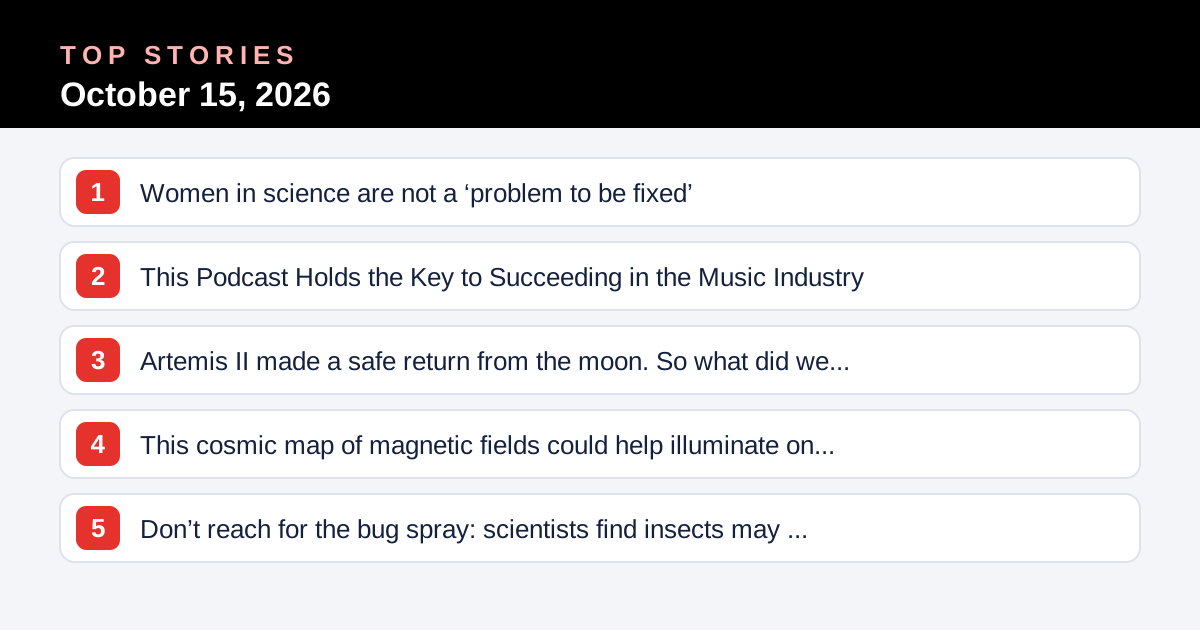
Women in science are not a ‘problem to be fixed’
Nature reported this story on Mar 5, 2026 under the headline "Women in science are not a ‘problem to be fixed’". Short headlines are built to be understood at a glance, which is why they travel so well on social media. Before sharing, it helps to open the linked report and check who wrote it and when it was published.
Source: Nature, Mar 5, 2026
This Podcast Holds the Key to Succeeding in the Music Industry
Under the headline "This Podcast Holds the Key to Succeeding in the Music Industry", Northeastern Global News covered this story on Mar 17, 2026. Interest in a story often grows when several outlets cover it at once, which makes it feel bigger than any single report. Readers who want details should follow the link, because this summary does not replace the original reporting. The full article is the place to find names, numbers, and quotes, none of which are repeated here.
Source: Northeastern Global News, Mar 17, 2026
Artemis II made a safe return from the moon. So what did we really gain?
Under the headline "Artemis II made a safe return from the moon. So what did we really gain?", Scientific American covered this story on Apr 13, 2026. Interest in a story often grows when several outlets cover it at once, which makes it feel bigger than any single report. Readers who want details should follow the link, because this summary does not replace the original reporting.
Source: Scientific American, Apr 13, 2026
This cosmic map of magnetic fields could help illuminate one of the universe’s most mysterious forces
The Guardian reported this story on Jun 4, 2026 under the headline "This cosmic map of magnetic fields could help illuminate one of the universe’s most mysterious forces". Headlines like this spread quickly because readers often share them before opening the full article. Updates are common as new information arrives, so the original page may now say more than the headline did. The full article is the place to find names, numbers, and quotes, none of which are repeated here.
Source: The Guardian, Jun 4, 2026
Don’t reach for the bug spray: scientists find insects may feel pain after crickets nurse sore antennae
The headline "Don’t reach for the bug spray: scientists find insects may feel pain after crickets nurse sore antennae" appeared on May 13, 2026 from The Guardian. Short headlines are built to be understood at a glance, which is why they travel so well on social media. Before sharing, it helps to open the linked report and check who wrote it and when it was published.
Source: The Guardian, May 13, 2026
The 14 biotech podcasts worth your time in 2026
The headline "The 14 biotech podcasts worth your time in 2026" appeared on Jan 12, 2026 from Labiotech.eu. Stories that touch everyday life tend to be passed along fast, even when only a few details are known. If the story matters to you, compare it with a second outlet to see whether the main points match. The full article is the place to find names, numbers, and quotes, none of which are repeated here.
Source: Labiotech.eu, Jan 12, 2026
Brandon University Professor Launches Podcast Exposing the Stolen Scientific Legacy of Indigenous Peoples
Brandon University News reported this story on Apr 16, 2026 under the headline "Brandon University Professor Launches Podcast Exposing the Stolen Scientific Legacy of Indigenous Peoples". Interest in a story often grows when several outlets cover it at once, which makes it feel bigger than any single report. Checking the publication date matters, because older stories sometimes resurface and look new.
Source: Brandon University News, Apr 16, 2026
Obama shuts down alien buzz: 'no evidence during my presidency'
Under the headline "Obama shuts down alien buzz: 'no evidence during my presidency'", PBS covered this story on Feb 16, 2026. Interest in a story often grows when several outlets cover it at once, which makes it feel bigger than any single report. A good habit is to read past the first paragraph and look for named sources and clear dates.
Source: PBS, Feb 16, 2026
James Cameron Slams America for 'Turning Its Back on Science'
On Jan 22, 2026, Variety published a report headlined "James Cameron Slams America for 'Turning Its Back on Science'". Interest in a story often grows when several outlets cover it at once, which makes it feel bigger than any single report. Updates are common as new information arrives, so the original page may now say more than the headline did.
Source: Variety, Jan 22, 2026
This Two-Week Treatment May Reset the Brain, Treating Postpartum Depression
Scientific American reported this story on Dec 5, 2025 under the headline "This Two-Week Treatment May Reset the Brain, Treating Postpartum Depression". A headline can only hold a fraction of a story, so the full report usually contains context that a headline leaves out. Checking the publication date matters, because older stories sometimes resurface and look new.
Source: Scientific American, Dec 5, 2025
30th Annual Webby Awards Podcast Nominees
On Mar 31, 2026, Podnews published a report headlined "30th Annual Webby Awards Podcast Nominees". A headline can only hold a fraction of a story, so the full report usually contains context that a headline leaves out. Readers who want details should follow the link, because this summary does not replace the original reporting. This is one of the stories people have been talking about, and the source link below leads to the full report.
Source: Podnews, Mar 31, 2026
This week in science: A Saturn moon's ocean, chameleon eyes and energy used for AI
On Nov 13, 2025, NPR published a report headlined "This week in science: A Saturn moon's ocean, chameleon eyes and energy used for AI". When a story trends, the first version many people see is a screenshot of the headline rather than the article itself. Readers who want details should follow the link, because this summary does not replace the original reporting.
Source: NPR, Nov 13, 2025
King Tut was buried with more than a hundred pairs of underwear—all tailored to fit his massive butt
Popular Science reported this story on Aug 12, 2026 under the headline "King Tut was buried with more than a hundred pairs of underwear—all tailored to fit his massive butt". Stories that touch everyday life tend to be passed along fast, even when only a few details are known. Updates are common as new information arrives, so the original page may now say more than the headline did. This is one of the stories people have been talking about, and the source link below leads to the full report.
Source: Popular Science, Aug 12, 2026
NASA goes nuclear for Mars, Iran war emissions spike, and a new Lyme vaccine shows real promise
The headline "NASA goes nuclear for Mars, Iran war emissions spike, and a new Lyme vaccine shows real promise" appeared on Mar 30, 2026 from Scientific American. When a story trends, the first version many people see is a screenshot of the headline rather than the article itself. If the story matters to you, compare it with a second outlet to see whether the main points match. We include it here because it was widely reported, not because we have verified every detail.
Source: Scientific American, Mar 30, 2026
Hackaday Podcast Episode 360: Cool Rubber Bands, Science-y Stuff, And The Whys Of Office Supplies
Hackaday ran this item on Mar 6, 2026 with the headline "Hackaday Podcast Episode 360: Cool Rubber Bands, Science-y Stuff, And The Whys Of Office Supplies". Interest in a story often grows when several outlets cover it at once, which makes it feel bigger than any single report. Readers who want details should follow the link, because this summary does not replace the original reporting.
Source: Hackaday, Mar 6, 2026
The Arctic Council Launches New Podcast: “We Want to Bring the Arctic to the World”
Under the headline "The Arctic Council Launches New Podcast: “We Want to Bring the Arctic to the World”", High North News covered this story on Nov 7, 2025. Stories that touch everyday life tend to be passed along fast, even when only a few details are known. A good habit is to read past the first paragraph and look for named sources and clear dates.
Source: High North News, Nov 7, 2025
Mosquitoes Discovered in Iceland for the First Time amid Rising Temperatures
Scientific American reported this story on Oct 27, 2025 under the headline "Mosquitoes Discovered in Iceland for the First Time amid Rising Temperatures". A headline can only hold a fraction of a story, so the full report usually contains context that a headline leaves out. A good habit is to read past the first paragraph and look for named sources and clear dates. The full article is the place to find names, numbers, and quotes, none of which are repeated here.
Source: Scientific American, Oct 27, 2025
‘Foolish’ CSIRO job cuts will mean Australia unable to provide climate projections to global reports, scientists warn
The Guardian ran this item on May 19, 2026 with the headline "‘Foolish’ CSIRO job cuts will mean Australia unable to provide climate projections to global reports, scientists warn". When a story trends, the first version many people see is a screenshot of the headline rather than the article itself. Checking the publication date matters, because older stories sometimes resurface and look new. This is one of the stories people have been talking about, and the source link below leads to the full report.
Source: The Guardian, May 19, 2026
Citizen scientists discover a Great Barrier Reef coral giant ‘like a rolling meadow’
Under the headline "Citizen scientists discover a Great Barrier Reef coral giant ‘like a rolling meadow’", The Guardian covered this story on Feb 24, 2026. Stories that touch everyday life tend to be passed along fast, even when only a few details are known. Checking the publication date matters, because older stories sometimes resurface and look new.
Source: The Guardian, Feb 24, 2026
‘Sad day for publicly funded science’: up to 350 more jobs to go at CSIRO
Under the headline "‘Sad day for publicly funded science’: up to 350 more jobs to go at CSIRO", The Guardian covered this story on Nov 18, 2025. A headline can only hold a fraction of a story, so the full report usually contains context that a headline leaves out. Checking the publication date matters, because older stories sometimes resurface and look new.
Source: The Guardian, Nov 18, 2025
The Bottom Line on Today's Viral Science news podcast Stories
These stories are a snapshot of what has been widely reported. Because details change, the linked articles are the best place for accurate and current information. Check back for new roundups as other stories rise through the news. Quality journalism depends on readers who value accuracy.
This roundup is compiled automatically from the linked news reports. Details may be incomplete or change; please read the original sources.