Science news journal Roundup: 20 Viral Stories in the USA (October 15, 2026)
Every day, a handful of stories break out of the news cycle and end up on phones, group chats, and social feeds across the United States. This science news journal roundup collects headlines that were widely reported, links each one to the outlet that published it, and adds a little context about why stories like these travel so fast.
A note on how this page works: the headlines and outlet names below come directly from public news feeds. We do not add details that the reports do not state, and we do not claim to know more than the original journalists. When you want facts, names, numbers, or quotes, open the linked report.
How This Roundup Is Put Together
The stories below were found through public news feeds that list headlines from many outlets. We look for recent reports that match the topic, skip repeats of the same story, and keep the outlet name and date next to each headline so you can judge the source for yourself.
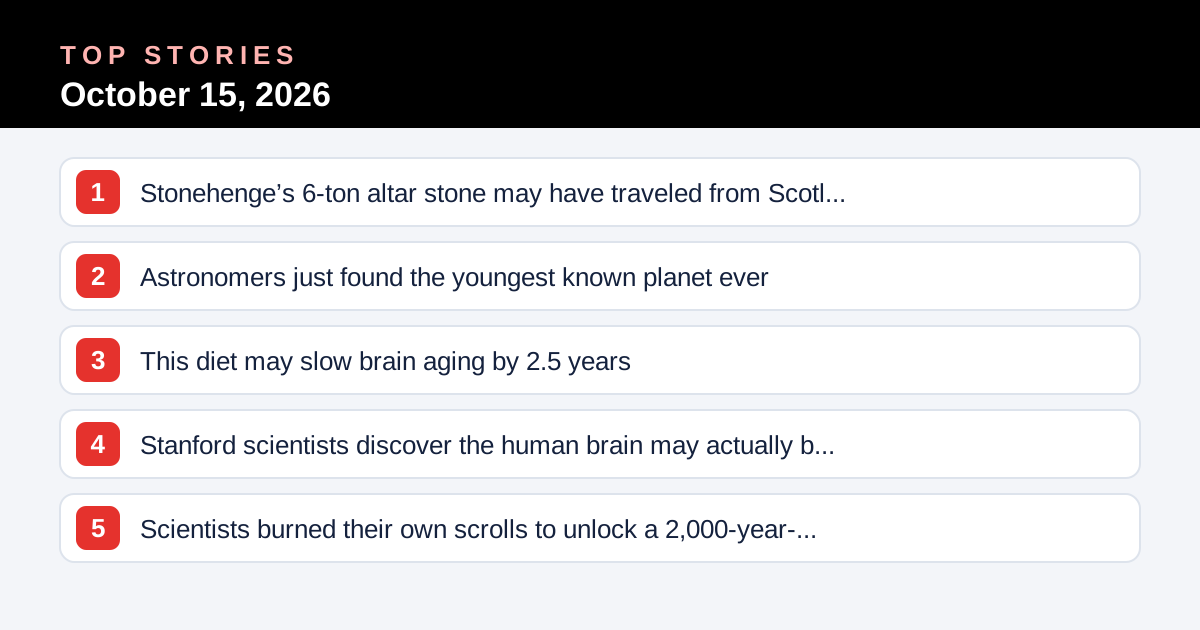
Stonehenge’s 6-ton altar stone may have traveled from Scotland by glacier
Science Daily reported this story on Sep 23, 2026 under the headline "Stonehenge’s 6-ton altar stone may have traveled from Scotland by glacier". Stories that touch everyday life tend to be passed along fast, even when only a few details are known. Before sharing, it helps to open the linked report and check who wrote it and when it was published. The full article is the place to find names, numbers, and quotes, none of which are repeated here.
Source: Science Daily, Sep 23, 2026
Astronomers just found the youngest known planet ever
The headline "Astronomers just found the youngest known planet ever" appeared on Sep 17, 2026 from Science Daily. Short headlines are built to be understood at a glance, which is why they travel so well on social media. Before sharing, it helps to open the linked report and check who wrote it and when it was published.
Source: Science Daily, Sep 17, 2026
This diet may slow brain aging by 2.5 years
Science Daily ran this item on Oct 1, 2026 with the headline "This diet may slow brain aging by 2.5 years". Stories that touch everyday life tend to be passed along fast, even when only a few details are known. A good habit is to read past the first paragraph and look for named sources and clear dates. We include it here because it was widely reported, not because we have verified every detail.
Source: Science Daily, Oct 1, 2026
Stanford scientists discover the human brain may actually be two separate organs
Under the headline "Stanford scientists discover the human brain may actually be two separate organs", Science Daily covered this story on Sep 21, 2026. Short headlines are built to be understood at a glance, which is why they travel so well on social media. A good habit is to read past the first paragraph and look for named sources and clear dates.
Source: Science Daily, Sep 21, 2026
Scientists burned their own scrolls to unlock a 2,000-year-old mystery
Science Daily reported this story on Sep 26, 2026 under the headline "Scientists burned their own scrolls to unlock a 2,000-year-old mystery". A headline can only hold a fraction of a story, so the full report usually contains context that a headline leaves out. Checking the publication date matters, because older stories sometimes resurface and look new. The full article is the place to find names, numbers, and quotes, none of which are repeated here.
Source: Science Daily, Sep 26, 2026
Nazi Germany had no hope of making an atomic bomb, uranium cubes reveal
Science | AAAS reported this story on Oct 1, 2026 under the headline "Nazi Germany had no hope of making an atomic bomb, uranium cubes reveal". When a story trends, the first version many people see is a screenshot of the headline rather than the article itself. Checking the publication date matters, because older stories sometimes resurface and look new.
Source: Science | AAAS, Oct 1, 2026
A new process turns plastic waste into gasoline and diesel fuel
On Sep 21, 2026, Science Daily published a report headlined "A new process turns plastic waste into gasoline and diesel fuel". Short headlines are built to be understood at a glance, which is why they travel so well on social media. Checking the publication date matters, because older stories sometimes resurface and look new. The full article is the place to find names, numbers, and quotes, none of which are repeated here.
Source: Science Daily, Sep 21, 2026
Creatine may help build muscle even without exercise, researchers find
The headline "Creatine may help build muscle even without exercise, researchers find" appeared on Sep 29, 2026 from Science Daily. Headlines like this spread quickly because readers often share them before opening the full article. Readers who want details should follow the link, because this summary does not replace the original reporting.
Source: Science Daily, Sep 29, 2026
Scientists find two tiny new snails with shells that close like doors
On Sep 24, 2026, Science Daily published a report headlined "Scientists find two tiny new snails with shells that close like doors". When a story trends, the first version many people see is a screenshot of the headline rather than the article itself. A good habit is to read past the first paragraph and look for named sources and clear dates.
Source: Science Daily, Sep 24, 2026
Scientists discover first new penguin species in more than 100 years
Science Daily ran this item on Sep 21, 2026 with the headline "Scientists discover first new penguin species in more than 100 years". When a story trends, the first version many people see is a screenshot of the headline rather than the article itself. Checking the publication date matters, because older stories sometimes resurface and look new. The full article is the place to find names, numbers, and quotes, none of which are repeated here.
Source: Science Daily, Sep 21, 2026
NASA’s Moon Orbiter Spots New, ‘Once-in-Century’ Moon Crater
NASA Science (.gov) reported this story on Sep 16, 2026 under the headline "NASA’s Moon Orbiter Spots New, ‘Once-in-Century’ Moon Crater". Short headlines are built to be understood at a glance, which is why they travel so well on social media. Updates are common as new information arrives, so the original page may now say more than the headline did. This is one of the stories people have been talking about, and the source link below leads to the full report.
Source: NASA Science (.gov), Sep 16, 2026
Aging muscles may be losing strength for a reason scientists missed
Science Daily reported this story on Sep 24, 2026 under the headline "Aging muscles may be losing strength for a reason scientists missed". Stories that touch everyday life tend to be passed along fast, even when only a few details are known. If the story matters to you, compare it with a second outlet to see whether the main points match. We include it here because it was widely reported, not because we have verified every detail.
Source: Science Daily, Sep 24, 2026
Scientists discover an “impossible” cellular survival pathway that could help fight cancer
Science Daily reported this story on Sep 24, 2026 under the headline "Scientists discover an “impossible” cellular survival pathway that could help fight cancer". When a story trends, the first version many people see is a screenshot of the headline rather than the article itself. Checking the publication date matters, because older stories sometimes resurface and look new.
Source: Science Daily, Sep 24, 2026
Are major ocean currents moving to turn Earth into a snowball?
On Sep 17, 2026, Science News Explores published a report headlined "Are major ocean currents moving to turn Earth into a snowball?". A headline can only hold a fraction of a story, so the full report usually contains context that a headline leaves out. Before sharing, it helps to open the linked report and check who wrote it and when it was published.
Source: Science News Explores, Sep 17, 2026
Working around men may make women feel worse about mistakes, study finds
Frontiers reported this story on Oct 8, 2026 under the headline "Working around men may make women feel worse about mistakes, study finds". Short headlines are built to be understood at a glance, which is why they travel so well on social media. If the story matters to you, compare it with a second outlet to see whether the main points match. We include it here because it was widely reported, not because we have verified every detail.
Source: Frontiers, Oct 8, 2026
Mars shelter problem can be solved with engineered yeast: paper
Under the headline "Mars shelter problem can be solved with engineered yeast: paper", South China Morning Post covered this story on Oct 4, 2026. A headline can only hold a fraction of a story, so the full report usually contains context that a headline leaves out. Readers who want details should follow the link, because this summary does not replace the original reporting. This is one of the stories people have been talking about, and the source link below leads to the full report.
Source: South China Morning Post, Oct 4, 2026
Museum of Science unveils glass-walled venue after two-year construction project overlooking Charles River
On Oct 10, 2026, The Business Journals published a report headlined "Museum of Science unveils glass-walled venue after two-year construction project overlooking Charles River". When a story trends, the first version many people see is a screenshot of the headline rather than the article itself. Checking the publication date matters, because older stories sometimes resurface and look new.
Source: The Business Journals, Oct 10, 2026
Brain scans offer clues to why math is harder for some kids
TAPinto ran this item on Sep 23, 2026 with the headline "Brain scans offer clues to why math is harder for some kids". Headlines like this spread quickly because readers often share them before opening the full article. Updates are common as new information arrives, so the original page may now say more than the headline did.
Source: TAPinto, Sep 23, 2026
New Journal Section Puts Epigenetics on Trial: Ethics, Society and Science Collide
Bioengineer.org reported this story on Oct 3, 2026 under the headline "New Journal Section Puts Epigenetics on Trial: Ethics, Society and Science Collide". Short headlines are built to be understood at a glance, which is why they travel so well on social media. Updates are common as new information arrives, so the original page may now say more than the headline did. The full article is the place to find names, numbers, and quotes, none of which are repeated here.
Source: Bioengineer.org, Oct 3, 2026
The human brain may owe a lot of its size to our love of sweets
Science News Explores ran this item on Sep 18, 2026 with the headline "The human brain may owe a lot of its size to our love of sweets". Short headlines are built to be understood at a glance, which is why they travel so well on social media. Updates are common as new information arrives, so the original page may now say more than the headline did.
Source: Science News Explores, Sep 18, 2026
Final Thoughts on These Science news journal Headlines
These stories are a snapshot of what has been widely reported. Because details change, the linked articles are the best place for accurate and current information. Check back for new roundups as other stories rise through the news. Come back later because coverage keeps evolving. Notice the difference between reporting and opinion. If you spot an error in a report, tell the outlet that published it. Trusted reporting takes time, so be patient with developing stories. Think before you click. Your attention is worth spending wisely.
This roundup is compiled automatically from the linked news reports. Details may be incomplete or change; please read the original sources.