Live science news: 16 Trending Headlines From Across the USA
What are Americans reading and sharing right now? This guide to viral live science news stories gathers real headlines from news outlets, credits every source by name, and explains how to read each one with a clear head. It is a starting point, not a replacement for the original reporting.
Please treat this page as a map rather than the territory. The headlines are real and linked, but each one is only a summary of a longer report. Details can change as outlets update their coverage, so the original source is always the best place to check the latest facts.
Where These Headlines Come From
Headlines in this roundup come from public news feeds covering a wide range of outlets. Duplicates are removed, each item keeps its source name and publication date, and every headline is linked to the original article so nothing here depends on trust in this page alone.
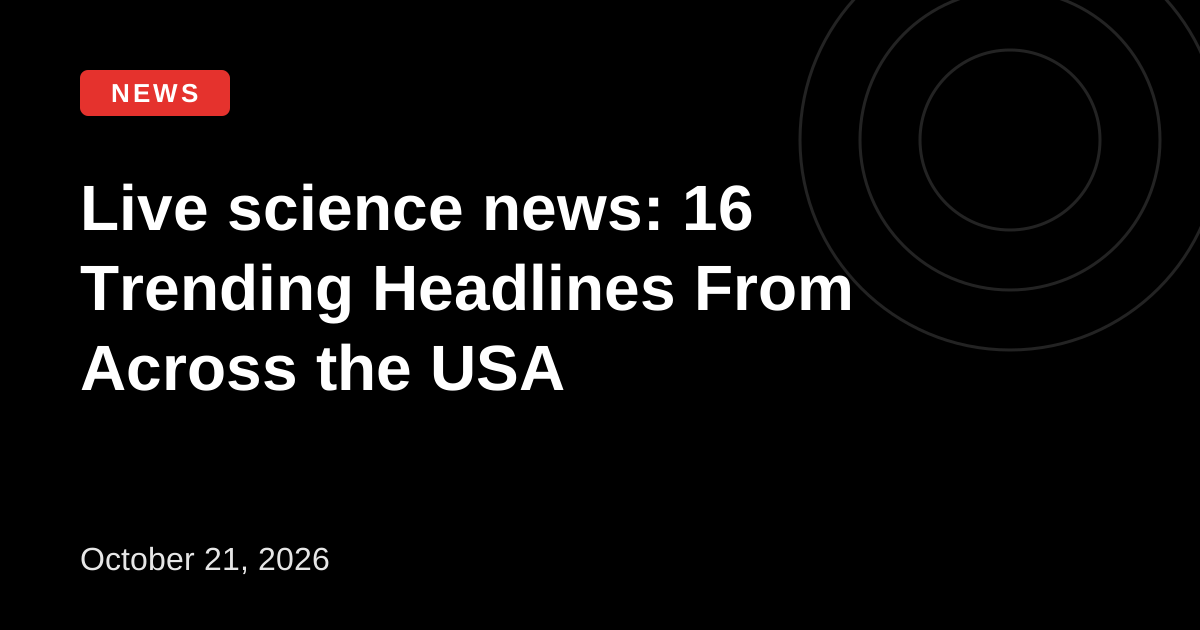
Black hole star? Solar-system-size 'dot' from the early universe is our best evidence yet of a brand-new type of cosmic object
Live Science ran this item on Aug 20, 2026 with the headline "Black hole star? Solar-system-size 'dot' from the early universe is our best evidence yet of a brand-new type of cosmic object". Interest in a story often grows when several outlets cover it at once, which makes it feel bigger than any single report. Updates are common as new information arrives, so the original page may now say more than the headline did. This is one of the stories people have been talking about, and the source link below leads to the full report.
Source: Live Science, Aug 20, 2026
Scientists spot icy object beyond Pluto with an atmosphere that shouldn't be there
Live Science ran this item on May 5, 2026 with the headline "Scientists spot icy object beyond Pluto with an atmosphere that shouldn't be there". Stories that touch everyday life tend to be passed along fast, even when only a few details are known. Checking the publication date matters, because older stories sometimes resurface and look new.
Source: Live Science, May 5, 2026
Introducing LifeSciBench
Under the headline "Introducing LifeSciBench", OpenAI covered this story on Jun 17, 2026. Stories that touch everyday life tend to be passed along fast, even when only a few details are known. Updates are common as new information arrives, so the original page may now say more than the headline did.
Source: OpenAI, Jun 17, 2026
'Textbooks will need to be updated': Jupiter is smaller and flatter than we thought, Juno spacecraft reveals
Under the headline "'Textbooks will need to be updated': Jupiter is smaller and flatter than we thought, Juno spacecraft reveals", Live Science covered this story on Feb 4, 2026. Short headlines are built to be understood at a glance, which is why they travel so well on social media. Updates are common as new information arrives, so the original page may now say more than the headline did. The full article is the place to find names, numbers, and quotes, none of which are repeated here.
Source: Live Science, Feb 4, 2026
Drought could fuel the rise of antibiotic-resistant superbugs as climate change worsens, new research suggests
The headline "Drought could fuel the rise of antibiotic-resistant superbugs as climate change worsens, new research suggests" appeared on Mar 24, 2026 from Live Science. A headline can only hold a fraction of a story, so the full report usually contains context that a headline leaves out. If the story matters to you, compare it with a second outlet to see whether the main points match.
Source: Live Science, Mar 24, 2026
Science history: Carbon-14 is discovered, opening a window into past civilizations — Feb. 27, 1940
Live Science reported this story on Feb 28, 2026 under the headline "Science history: Carbon-14 is discovered, opening a window into past civilizations — Feb. 27, 1940". Headlines like this spread quickly because readers often share them before opening the full article. Before sharing, it helps to open the linked report and check who wrote it and when it was published. The full article is the place to find names, numbers, and quotes, none of which are repeated here.
Source: Live Science, Feb 28, 2026
Exotic prime numbers could be hiding inside black holes
The headline "Exotic prime numbers could be hiding inside black holes" appeared on Mar 9, 2026 from Live Science. Interest in a story often grows when several outlets cover it at once, which makes it feel bigger than any single report. If the story matters to you, compare it with a second outlet to see whether the main points match. The full article is the place to find names, numbers, and quotes, none of which are repeated here.
Source: Live Science, Mar 9, 2026
Physicists recreated the first millisecond after the Big Bang — and found it was surprisingly soupy
Under the headline "Physicists recreated the first millisecond after the Big Bang — and found it was surprisingly soupy", Live Science covered this story on Feb 18, 2026. Interest in a story often grows when several outlets cover it at once, which makes it feel bigger than any single report. Before sharing, it helps to open the linked report and check who wrote it and when it was published.
Source: Live Science, Feb 18, 2026
'Maybe they're waiting for something that only happens thousands of years later': The hidden life 'sleeping' deep beneath Earth for millions of years
On Feb 8, 2026, Live Science published a report headlined "'Maybe they're waiting for something that only happens thousands of years later': The hidden life 'sleeping' deep beneath Earth for millions of years". Interest in a story often grows when several outlets cover it at once, which makes it feel bigger than any single report. A good habit is to read past the first paragraph and look for named sources and clear dates.
Source: Live Science, Feb 8, 2026
Exceptionally rare sighting of planets colliding may shed light on the crash that formed the moon
On Mar 12, 2026, Live Science published a report headlined "Exceptionally rare sighting of planets colliding may shed light on the crash that formed the moon". Stories that touch everyday life tend to be passed along fast, even when only a few details are known. Readers who want details should follow the link, because this summary does not replace the original reporting. We include it here because it was widely reported, not because we have verified every detail.
Source: Live Science, Mar 12, 2026
What would happen to Earth if the sun suddenly vanished?
Live Science ran this item on Mar 29, 2026 with the headline "What would happen to Earth if the sun suddenly vanished?". Interest in a story often grows when several outlets cover it at once, which makes it feel bigger than any single report. A good habit is to read past the first paragraph and look for named sources and clear dates. This is one of the stories people have been talking about, and the source link below leads to the full report.
Source: Live Science, Mar 29, 2026
The largest reservoir of hydrogen on Earth may be hiding in its core
Live Science reported this story on Feb 10, 2026 under the headline "The largest reservoir of hydrogen on Earth may be hiding in its core". Stories that touch everyday life tend to be passed along fast, even when only a few details are known. If the story matters to you, compare it with a second outlet to see whether the main points match.
Source: Live Science, Feb 10, 2026
Human-driven climate change is slowing Earth's rotation at a rate not seen in 3.6 million years
On Mar 20, 2026, Live Science published a report headlined "Human-driven climate change is slowing Earth's rotation at a rate not seen in 3.6 million years". Stories that touch everyday life tend to be passed along fast, even when only a few details are known. Checking the publication date matters, because older stories sometimes resurface and look new.
Source: Live Science, Mar 20, 2026
'What the heck is this?' James Webb telescope spots inexplicable planet with diamonds and soot in its atmosphere
Live Science ran this item on Dec 24, 2025 with the headline "'What the heck is this?' James Webb telescope spots inexplicable planet with diamonds and soot in its atmosphere". A headline can only hold a fraction of a story, so the full report usually contains context that a headline leaves out. Before sharing, it helps to open the linked report and check who wrote it and when it was published. The full article is the place to find names, numbers, and quotes, none of which are repeated here.
Source: Live Science, Dec 24, 2025
'Like watching a cosmic volcano erupt': Scientists see monster black hole 'reborn' after 100 million years
Under the headline "'Like watching a cosmic volcano erupt': Scientists see monster black hole 'reborn' after 100 million years", Live Science covered this story on Jan 20, 2026. Headlines like this spread quickly because readers often share them before opening the full article. If the story matters to you, compare it with a second outlet to see whether the main points match. We include it here because it was widely reported, not because we have verified every detail.
Source: Live Science, Jan 20, 2026
Strange, 7-hour explosion from deep space is unlike anything scientists have seen — Space photo of the week
Under the headline "Strange, 7-hour explosion from deep space is unlike anything scientists have seen — Space photo of the week", Live Science covered this story on Dec 14, 2025. Headlines like this spread quickly because readers often share them before opening the full article. Updates are common as new information arrives, so the original page may now say more than the headline did.
Source: Live Science, Dec 14, 2025
How Outlets Update Developing Stories
When events are still unfolding, reporters publish early versions and then update them as new facts arrive. That means a headline you saw this morning may have changed by the afternoon. Responsible outlets mark corrections and updates, usually near the top or bottom of the article. If you are following a developing story, check the original link again later instead of relying on a screenshot or a repost.
Why Numbers in Headlines Need Context
A number in a headline can sound precise while hiding important details. A figure may refer to a single place, a short period, or a particular definition that differs from what readers assume. Percentages can look large when the starting number is small, and totals can look small when spread across many people. The article itself usually explains what is being counted and how, which is why it is worth reading beyond the first line.
How to Check a Headline Before You Share It
Start with the outlet. Is it a known publication with a named newsroom and a way to contact it? Then look at the date, the author, and the sources the article quotes. Read beyond the headline, because headlines are written to attract attention and can leave out important limits. If something sounds surprising, search for the same story on another outlet. When several independent reports agree on the main facts, that is a good sign. When only one obscure page carries it, wait before sharing.
What to Remember About Viral Live science news News
The headlines above show what many readers across the United States have been following. Each one links to the original report, which is where the facts, names, and quotes belong. Use this roundup as a quick guide, then read the sources that interest you. Wait for confirmation on fast-moving events. Think before you click. If you spot an error in a report, tell the outlet that published it. Read the source.
This roundup is compiled automatically from the linked news reports. Details may be incomplete or change; please read the original sources.