Google economic news Roundup: 12 Viral Stories in the USA (October 16, 2026)
Viral Google economic news stories rarely stay in one place. A single headline can move from a local website to national television and then to millions of screens within hours. Below is a roundup of recent headlines from across the USA, each linked to the original report so you can read the full story yourself.
Every item below points to a real report from a named outlet. The commentary around each headline is general context about how news spreads and how to read it, not new reporting. If a story matters to you, follow the link and read it in full before you share it.
How This Roundup Is Put Together
Headlines in this roundup come from public news feeds covering a wide range of outlets. Duplicates are removed, each item keeps its source name and publication date, and every headline is linked to the original article so nothing here depends on trust in this page alone.
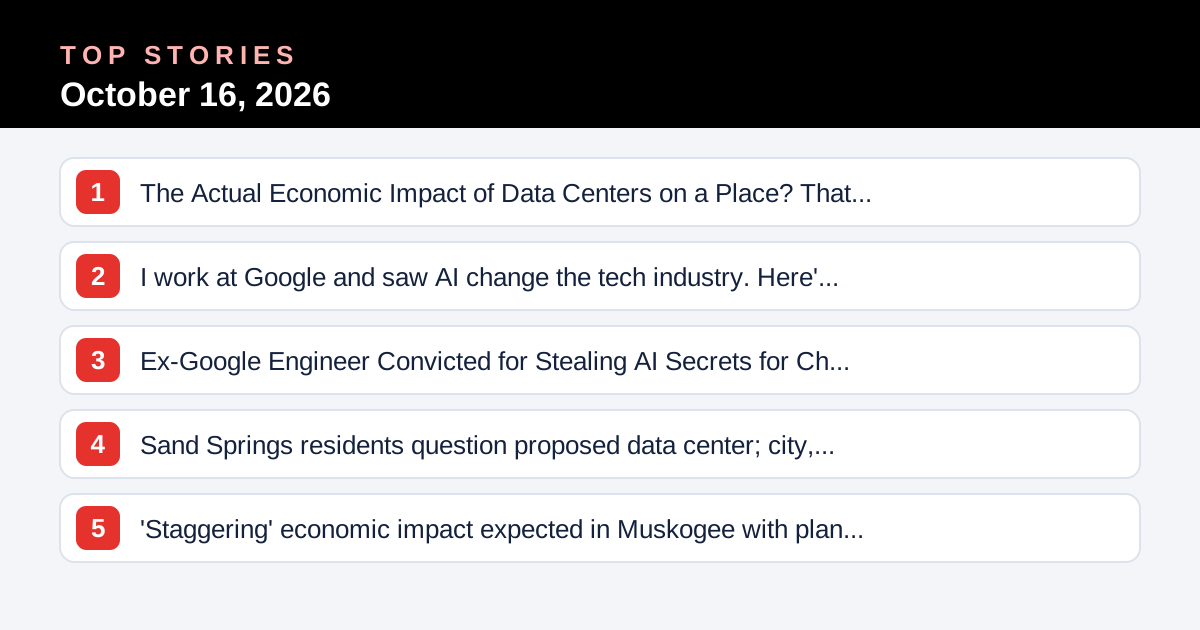
The Actual Economic Impact of Data Centers on a Place? That’s a Secret.
On Apr 13, 2026, Mother Jones published a report headlined "The Actual Economic Impact of Data Centers on a Place? That’s a Secret.". Short headlines are built to be understood at a glance, which is why they travel so well on social media. Readers who want details should follow the link, because this summary does not replace the original reporting. We include it here because it was widely reported, not because we have verified every detail.
Source: Mother Jones, Apr 13, 2026
I work at Google and saw AI change the tech industry. Here's how I upskilled and made a 'future-defining' career pivot.
Business Insider reported this story on Mar 7, 2026 under the headline "I work at Google and saw AI change the tech industry. Here's how I upskilled and made a 'future-defining' career pivot.". Stories that touch everyday life tend to be passed along fast, even when only a few details are known. Checking the publication date matters, because older stories sometimes resurface and look new.
Source: Business Insider, Mar 7, 2026
Ex-Google Engineer Convicted for Stealing AI Secrets for China Startup
The Hacker News ran this item on Jan 30, 2026 with the headline "Ex-Google Engineer Convicted for Stealing AI Secrets for China Startup". When a story trends, the first version many people see is a screenshot of the headline rather than the article itself. A good habit is to read past the first paragraph and look for named sources and clear dates.
Source: The Hacker News, Jan 30, 2026
Sand Springs residents question proposed data center; city, Google pitch economic benefits
Under the headline "Sand Springs residents question proposed data center; city, Google pitch economic benefits", News On 6 covered this story on Jan 20, 2026. Interest in a story often grows when several outlets cover it at once, which makes it feel bigger than any single report. A good habit is to read past the first paragraph and look for named sources and clear dates. This is one of the stories people have been talking about, and the source link below leads to the full report.
Source: News On 6, Jan 20, 2026
'Staggering' economic impact expected in Muskogee with plans for Google data center campus
The Journal Record reported this story on Nov 10, 2025 under the headline "'Staggering' economic impact expected in Muskogee with plans for Google data center campus". A headline can only hold a fraction of a story, so the full report usually contains context that a headline leaves out. Before sharing, it helps to open the linked report and check who wrote it and when it was published. This is one of the stories people have been talking about, and the source link below leads to the full report.
Source: The Journal Record, Nov 10, 2025
NextEra Energy and Google Announce New Collaboration to Accelerate Nuclear Energy Deployment in the U.S.
Under the headline "NextEra Energy and Google Announce New Collaboration to Accelerate Nuclear Energy Deployment in the U.S.", NextEra Energy Newsroom covered this story on Oct 27, 2025. Short headlines are built to be understood at a glance, which is why they travel so well on social media. A good habit is to read past the first paragraph and look for named sources and clear dates.
Source: NextEra Energy Newsroom, Oct 27, 2025
How a SpaceX IPO could deliver Google one of the most lucrative startup wins ever
The headline "How a SpaceX IPO could deliver Google one of the most lucrative startup wins ever" appeared on Dec 10, 2025 from Business Insider. Stories that touch everyday life tend to be passed along fast, even when only a few details are known. Checking the publication date matters, because older stories sometimes resurface and look new. This is one of the stories people have been talking about, and the source link below leads to the full report.
Source: Business Insider, Dec 10, 2025
Microsoft, Google say their data centers create thousands of jobs. Their permit filings say otherwise
Rest of World ran this item on Nov 5, 2025 with the headline "Microsoft, Google say their data centers create thousands of jobs. Their permit filings say otherwise". Short headlines are built to be understood at a glance, which is why they travel so well on social media. Readers who want details should follow the link, because this summary does not replace the original reporting.
Source: Rest of World, Nov 5, 2025
Google secures discom licence for Vizag data centre hub
On Apr 11, 2026, The Economic Times published a report headlined "Google secures discom licence for Vizag data centre hub". Stories that touch everyday life tend to be passed along fast, even when only a few details are known. Checking the publication date matters, because older stories sometimes resurface and look new.
Source: The Economic Times, Apr 11, 2026
SERAP wants Google, others probed for undermining citizens’ rights, businesses
The Guardian Nigeria News ran this item on Mar 2, 2026 with the headline "SERAP wants Google, others probed for undermining citizens’ rights, businesses". A headline can only hold a fraction of a story, so the full report usually contains context that a headline leaves out. A good habit is to read past the first paragraph and look for named sources and clear dates.
Source: The Guardian Nigeria News, Mar 2, 2026
Google Willow: The secrets of the world's most powerful quantum computer
On Jan 8, 2026, BBC published a report headlined "Google Willow: The secrets of the world's most powerful quantum computer". Short headlines are built to be understood at a glance, which is why they travel so well on social media. A good habit is to read past the first paragraph and look for named sources and clear dates.
Source: BBC, Jan 8, 2026
AI News Tracker: Meta runs into anti-privacy controversy, while Google says AI can help Indian MSMEs
Livemint reported this story on Jul 12, 2026 under the headline "AI News Tracker: Meta runs into anti-privacy controversy, while Google says AI can help Indian MSMEs". When a story trends, the first version many people see is a screenshot of the headline rather than the article itself. Before sharing, it helps to open the linked report and check who wrote it and when it was published. The full article is the place to find names, numbers, and quotes, none of which are repeated here.
Source: Livemint, Jul 12, 2026
Corrections and Retractions: Signs of a Healthy Newsroom
Every newsroom makes mistakes, and what matters is how they are handled. Reliable outlets publish clear corrections, explain what changed, and keep the original page available with a note. If an article has been quietly changed with no explanation, or an error is repeated across many pages, that can be a warning sign. When you see a visible corrections policy, it shows that the outlet is willing to be held accountable by its readers.
Why Numbers in Headlines Need Context
A number in a headline can sound precise while hiding important details. A figure may refer to a single place, a short period, or a particular definition that differs from what readers assume. Percentages can look large when the starting number is small, and totals can look small when spread across many people. The article itself usually explains what is being counted and how, which is why it is worth reading beyond the first line.
How Fact-Checkers Verify Viral Claims
Fact-checkers follow a simple routine. They find the original source of a claim, look for documents or recordings that support it, and ask whether the evidence matches what is being said. They also check dates and locations, because many viral posts mix real material with the wrong context. Readers can borrow the same habits: trace a claim back to where it started, look for primary sources such as official statements or court records, and be cautious when a post offers dramatic wording but no way to confirm it.
Sources, Dates, and Named Reporters
Three small details tell you a lot about a news article: who published it, when, and who wrote it. A named reporter, a visible date, and links to original documents or statements make an article easier to check. When those details are missing, it is harder to know how much weight to give the story. The reports linked in this roundup show the outlet and date so you can make that judgment yourself.
Opinion Pieces Versus News Reports
News reports aim to describe what happened, while opinion pieces argue for a point of view. Both can be valuable, but they should not be mixed up. Reputable outlets label opinion and analysis clearly. When a headline sounds more like a verdict than a description, check whether the article is an opinion column before treating its claims as settled facts.
How Outlets Update Developing Stories
When events are still unfolding, reporters publish early versions and then update them as new facts arrive. That means a headline you saw this morning may have changed by the afternoon. Responsible outlets mark corrections and updates, usually near the top or bottom of the article. If you are following a developing story, check the original link again later instead of relying on a screenshot or a repost.
Headlines Versus the Full Story
A headline is a promise of a story, not the story. It has to be short, so it compresses events into a handful of words and often drops qualifiers such as who said something, what is still unknown, or what has changed since. Reading the full article usually shows more careful wording than the headline suggests. This is why the links in this roundup matter: they lead to the complete reports where those details live.
Local Stories That Become National News
Many stories that trend nationally begin as local reports from a small newsroom. A video, a court filing, or a community event catches attention, gets shared widely, and is then picked up by larger outlets. Local reporters often have the best details, so the original local article is worth reading when you can find it. National summaries sometimes repeat the key points but skip the background that residents know well.
What to Remember About Viral Google economic news News
The headlines above show what many readers across the United States have been following. Each one links to the original report, which is where the facts, names, and quotes belong. Use this roundup as a quick guide, then read the sources that interest you. Notice how a story makes you feel, then check the facts. Small details often change the meaning of a headline. One careful read beats ten quick scrolls. Trusted reporting takes time, so be patient with developing stories. If you spot an error in a report, tell the outlet that published it. Look twice before you forward a story.
This roundup is compiled automatically from the linked news reports. Details may be incomplete or change; please read the original sources.